
How Much Does a School Website Cost?
A school website generally costs anywhere from a small monthly subscription for a DIY builder, to a mid four-figure upfront fee from a freelancer, to five figures for a specialized education-agency build — before hosting, accessibility upkeep, and maintenance are added on top. What you are really paying for is the structure a school actually needs: a reliable events calendar, a staff and department directory, enrollment pages, board-policy space, translations, and ADA-conscious accessibility. WebEngine builds all of that on one flat monthly plan, with hosting, maintenance, and a live review widget included.
What Actually Drives the Price for a School
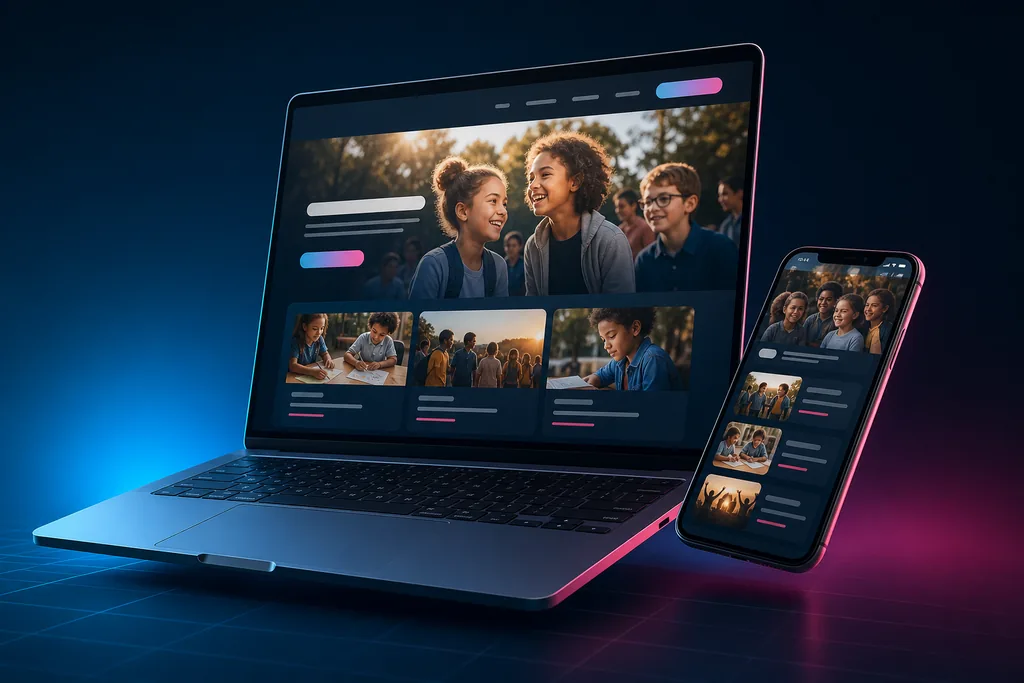
A school website costs more than a generic small-business site for a simple reason: it serves more people, does more jobs, and is held to a higher legal standard. Prospective families, current parents, students, staff, and the wider community all rely on it, and each of the following pushes the build well past a basic brochure.
A calendar and directory parents actually use
The two most-visited things on almost any school site are the events calendar and the staff directory. Parents check the calendar for early-release days, closures, conferences, sports, and holidays; they use the directory to reach a specific teacher or the front office. Building a calendar that is easy to update all year, and a directory organized by grade or department with the right contact routes, is real structure — and it is the difference between a site families trust and one they stop opening.
Admissions and enrollment pages that convert
For private, charter, and choice schools especially, enrollment now starts on the website. That means admissions pages that explain the process clearly, tuition and financial-aid information, open-house and tour scheduling, and a clean path into whatever application or registration system you use. This is the part of the site that directly affects enrollment numbers, and getting it right takes more thought — and more build time — than a template’s contact form.
Accessibility that meets a school’s legal bar
This is the cost driver most templates ignore. Schools are held to ADA and Section 508 expectations, and accessibility complaints against school and district sites are common and real. Meeting WCAG standards — proper color contrast, alt text on every image, keyboard navigation, captioned media, readable heading structure — is genuine work that a drag-and-drop builder does not do for you. Translations for the languages spoken by your families add another layer. For a school, accessibility is not a nice-to-have you can defer; it is part of the base cost of doing this properly.

New Business Website
A professional website built for your business — design, hosting, security, and reviews handled for you.
- Custom professional design
- Hosting & security included
- Mobile-first & fast
- Live review widget built in
Website Support
Already have a website? We keep it updated, secure, fast — and make your changes for you.
- Updates, backups & security
- Content edits done for you
- Speed & uptime monitoring
- Works with sites we didn’t build
The Real Market: DIY vs Freelancer vs Agency vs Specialist
Here is the landscape in plain terms. These are qualitative ranges, not quotes — providers vary enormously, and your scope changes everything. A one-room preschool and a K-12 district are buying very different products.
DIY site builders
The cheapest path on paper: a small monthly subscription for a drag-and-drop platform. The catch is that everything that makes a school site work — the calendar upkeep, the staff directory, the enrollment pages, the translations, and the accessibility remediation — is now the front office’s job. For a brand-new, very small private school it can be a reasonable start. For any school that answers to families and accessibility law, the generic result usually costs more in frustration and exposure than the subscription saves.
Freelancers
A capable freelance web designer typically quotes a mid four-figure upfront project fee for a custom school site. You often get a better-looking, more tailored result than DIY — but hosting, security, accessibility maintenance, and every future change are usually billed separately or hourly, and a solo freelancer can be hard to reach mid-year when you need the calendar fixed or a closure notice posted the morning of a snow day.
Agencies
A full-service agency building a custom site for a school or district frequently lands in the five-figure range upfront, and for a large district with many campuses it can go considerably higher. You get strategy, design, and project management — and a monthly support or retainer plan on top. It is the premium path, and it is genuinely worth it for large districts with complex needs. For a single school or small district, it is often more overhead than the job requires.
Education-specific platforms and specialists
Some vendors sell school-specific website systems, often bundled with a content-management portal and parent-communication tools. These can be effective, but read the terms: the site is frequently tied to a multi-year contract and the platform, and you may not truly own it if you leave. The monthly figure can also climb well past what a standalone school website should cost once communication apps, alerts, and add-on modules are folded in.
What’s Usually Included — and What’s Not
The build fee you are quoted rarely covers everything. Before you compare numbers, get clear on which of these are in the price and which arrive later as a second invoice.
Often included in the build
- Design and page layout
- Core pages (home, about, academics, contact)
- A basic events calendar and contact form
- Mobile responsiveness
- Initial copy for the pages built
Often billed separately
- Hosting, domain, and SSL
- Security monitoring and backups
- Ongoing accessibility remediation and updates
- Edits after launch — calendar, staff, notices
- Translations and the local review widget
The Ongoing Costs Nobody Mentions Upfront
A school website is not a one-time purchase; it is a thing you run every single school year. After launch, it still needs hosting and a domain, an SSL certificate, security monitoring, regular backups, and platform and plugin updates so it does not break or get compromised. Then there are the edits — and schools generate a lot of them: new calendar events, staff changes each fall, enrollment deadlines, board documents and required notices, and the closure alert you need posted at six in the morning on a snow day. Accessibility upkeep is ongoing too, because every new PDF, image, or page can reintroduce a compliance problem. If each of those changes means paying an hourly rate, the site quietly rots — which is the most common reason school websites look years out of date and carry expired information. When you compare costs, the honest question is not “what does the build cost” but “what does it cost to keep this site accurate and accessible for the next three years.”
The WebEngine Model: One Flat Monthly Plan
We built our pricing around the ongoing-cost problem instead of ignoring it. Rather than a large upfront invoice plus a stack of add-ons, WebEngine turns the whole thing into one flat monthly plan. That covers a custom school website — the events calendar, the staff and department directory, the admissions and enrollment pages, space for board policies and notices, and accessibility built in from the start — plus hosting, security, ongoing maintenance, and every edit you need as the school year moves. The Bird Local review widget that shows your live Google reviews is included too. There is no five-figure build fee to clear before you are online, and no surprise second invoice when you need a closure posted or a teacher added. Everything covered is laid out on our Web Design page, and if you already have a school site that needs work, our website support can help.
School Website Cost FAQs
How much does a school website cost?
It depends almost entirely on who builds it and how much the site has to do. A DIY website builder is a small monthly subscription, but the calendar, staff directory, enrollment pages, translations, and ADA accessibility work all fall on your office staff. A freelancer usually quotes a mid four-figure upfront project fee, with hosting and future edits billed on top. A specialized education-web agency build often lands in the five-figure range upfront, plus a monthly support contract. WebEngine builds school websites on one flat monthly plan with hosting, maintenance, and accessibility built in — see our Web Design page for exactly what that covers.
Why does a school website cost more than a basic small-business site?
Because a school site carries far more than a brochure. It needs an events calendar parents actually check, a staff and department directory, admissions and enrollment pages, a place for board policies and required notices, and often translations for the families in your community. On top of that, ADA and Section 508 accessibility is not optional for schools the way it is for a coffee shop — it is a legal expectation. Each of those is real structure a generic template does not ship with, which is why a working school site is a different product from a one-page brochure.
Should a school pay upfront for a website or pay monthly?
Both models exist and both can be honest. A large upfront project fee means the district or school owns the site outright, but hosting, security, accessibility upkeep, and every future change are billed on top — and school sites tend to go stale fast when edits cost money each time. A flat monthly plan spreads the cost and bundles maintenance, hosting, and updates, so the calendar and staff pages stay current through the school year. WebEngine uses the monthly model on purpose, because a school site is something you run, not something you buy once.
What ongoing costs come after a school website is built?
Even after launch, a school site still costs money to run: hosting and a domain, an SSL certificate, security monitoring and backups, platform and plugin updates, and the steady stream of edits a school needs — new calendar events, staff changes, enrollment deadlines, board documents, and closure notices. Freelance and agency builds usually bill these as a separate care plan on top of the build fee. On WebEngine’s plan, hosting, security, maintenance, accessibility upkeep, and ongoing changes are included in the one monthly figure, so there is no surprise second invoice.
Is a cheap DIY builder good enough for a school?
For a very small private school or preschool just getting online, a DIY builder can work as a start. But schools carry accessibility obligations, parents expect a reliable calendar and directory, and enrollment increasingly starts on the website. DIY sites tend to stall at a generic template with no accessibility remediation and no translation, and that is exactly where a school is most exposed — to a frustrated parent, or to an accessibility complaint. If the site’s job is enrolling students and serving families, the DIY savings usually cost more than they save.
Explore More
See what a full build looks like on our school website design page, review everything included in our web design services, or browse every industry we serve — including related organizations like church website design and nonprofit website design.
Ready for a School Website Families Can Rely On?
Stop guessing at build fees and hidden add-ons. Get a school website with a calendar that stays current, enrollment pages that convert, and accessibility handled — on one simple monthly plan with everything included. See what that covers on our Web Design page.
New Business Website
A professional website built for your business — design, hosting, security, and reviews handled for you.
- Custom professional design
- Hosting & security included
- Mobile-first & fast
- Live review widget built in
Website Support
Already have a website? We keep it updated, secure, fast — and make your changes for you.
- Updates, backups & security
- Content edits done for you
- Speed & uptime monitoring
- Works with sites we didn’t build