Nonprofit Website Design Built to Grow Giving
Nonprofit website design has one measure of success: does the site move people to give, volunteer, and stay? That takes a donation flow with no friction, impact storytelling that shows what a gift actually does, a visible layer of financial transparency, and a volunteer path that captures willing hands before their enthusiasm cools. WebEngine builds all of it on one flat monthly plan — hosting, maintenance, and a live review widget included — so your budget goes to the mission, not the website.

New Business Website
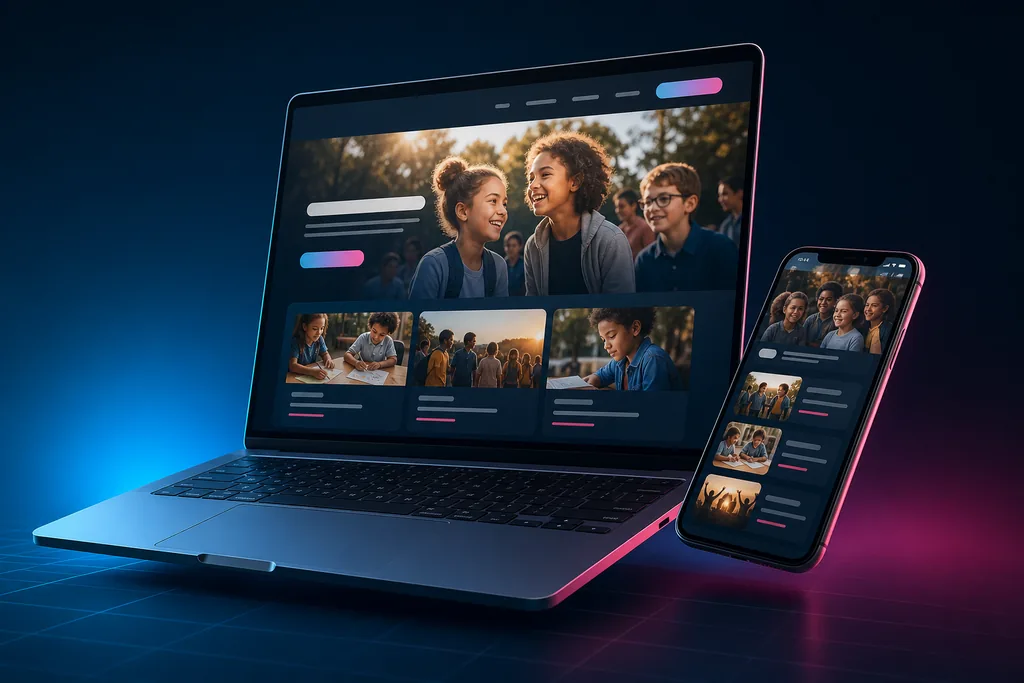
A professional website built for your business — design, hosting, security, and reviews handled for you.
- Custom professional design
- Hosting & security included
- Mobile-first & fast
- Live review widget built in
Website Support
Already have a website? We keep it updated, secure, fast — and make your changes for you.
- Updates, backups & security
- Content edits done for you
- Speed & uptime monitoring
- Works with sites we didn’t build
The Three Jobs a Nonprofit Website Has to Do
A nonprofit website is not a brochure for the board. It is the place where a first-time visitor decides, in a minute or two, whether your organization is real, effective, and worth their money or their Saturday. Most nonprofit sites fail that test quietly — not because the mission is weak, but because the site buries the donate button, tells no story, and answers none of the questions a careful donor actually asks.
Convert intent into a gift — before the moment passes
Generosity is perishable. Someone moved by your story at 9pm wants to give at 9pm — not after creating an account, hunting for a donate link, or being bounced to a clunky third-party page that looks nothing like your organization. The donation path needs to be one obvious button on every page, leading to a short form that works flawlessly on a phone. Every extra field and every extra second costs you completed gifts.
Make the impact concrete
Donors don’t fund organizations; they fund outcomes. “We serve the community” persuades no one — “here is Maria, here is the program that helped her, here is what changed” persuades almost everyone. The website’s deepest job is turning your day-to-day work into specific, honest stories a stranger can feel, with real photos from your programs rather than stock imagery of generic helping hands.
Capture volunteers and supporters, not just donations
Money is one currency; time and attention are the others. A visitor who isn’t ready to give today may be ready to volunteer, attend an event, or join your email list — and that person often becomes a donor later. The site needs a simple volunteer signup that tells people what roles exist and what happens after they raise their hand, plus an email capture that earns the address with something worth reading.
Must-Have Features for a Nonprofit Website
These are the features that separate a nonprofit website that grows giving from one that just holds a mission statement. Every WebEngine nonprofit build includes them.
A donation flow designed like it matters
The donate experience should live on your site (embedded forms from tools like Givebutter, Donorbox, or your CRM’s giving module), default to a few suggested gift amounts, prominently offer monthly recurring giving — the most valuable checkbox in nonprofit fundraising, because a modest monthly gift outlasts most one-time donations — and finish with an immediate, warm confirmation. Cover-the-fees options, employer matching prompts, and tribute gifts are worth adding once the basic flow is clean.
A page for every program
One “What We Do” paragraph cannot carry an organization with three programs. Each program deserves its own page: the problem it addresses, who it serves, how it works, a story from inside it, and a way to support it specifically. Donors and grantmakers who care about youth services shouldn’t have to dig through your food-pantry content to find them — and search engines can only rank pages that exist.
The transparency layer: where donor trust is actually won
Here is the part of nonprofit web design most agencies skip, and it’s the part sophisticated donors check first. Giving is an act of trust in an organization the donor usually cannot inspect — so careful donors, and virtually all foundations and corporate givers, verify before they give.
Four things belong on your website, plainly presented. First, your tax-exempt status and EIN: stating that you’re a 501(c)(3) and that gifts are tax-deductible to the extent the law allows, with your EIN visible, lets a donor verify you in the IRS database in seconds. Second, your financials: your Form 990 is already a public document — linking your latest one alongside a plain-language annual report turns an awkward question into a strength. Third, third-party validation: a current profile on Candid (formerly GuideStar) or Charity Navigator, linked from your site, is shorthand many donors trust. Fourth, fundraising registration: most states require charities to register before soliciting donations from their residents, and online donation pages can reach donors anywhere — registration is your obligation to confirm with counsel, but a footer disclosure showing you take it seriously reads as professionalism.
To be clear, we’re web designers, not attorneys or accountants — charitable registration and disclosure requirements vary by state and should be confirmed with your advisors. But we will never ship a nonprofit site that hides the trust signals your largest potential donors are specifically looking for. Many sites do, and the gifts they lose are precisely the biggest ones.
The basics, done properly
- A donate button in the header of every page — visually distinct, one tap away, always.
- Accessibility built in — readable contrast, labeled forms, alt text, keyboard navigation. Mission-driven organizations should be usable by everyone, and accessible sites also avoid the ADA complaints that increasingly target nonprofits.
- Secure donation handling — payments processed by a PCI-compliant processor over an encrypted connection, never card details into a generic form.
- An events and email layer — upcoming events with signup, and an email list integration, because the inbox is still where donor relationships deepen.
- Fast load on phones — supporters click from social posts and email on mobile; a slow page loses the gift.
How Supporters Actually Find a Nonprofit Online
Nonprofits get found three ways: people search for the cause (“food bank near me,” “youth mentoring [city]”), people search for you by name after hearing about you, and people arrive from social media, news coverage, or a friend’s fundraiser. The website’s job is to be ready for all three — and a few tools tilt the field toward organizations that have their site in order.
Own the searches about your cause in your city
You will not outrank a national charity for broad terms, and you don’t need to. A local nonprofit wins by being the definitive answer for its cause in its service area: program pages that use the words people actually search, a complete Google Business Profile in the Nonprofit Organization category, and content that names the neighborhoods and communities you serve. This compounds over months — be wary of anyone promising fast rankings.
The Google Ad Grant: free reach most nonprofits leave unclaimed
Eligible 501(c)(3) organizations can apply for Google’s Ad Grants program, which provides a substantial monthly budget of free search advertising. It is one of the best deals in nonprofit marketing — and it depends entirely on your website, because the program’s policies require quality landing pages and the ads can only convert if the pages they reach do. A site with a real page per program is the prerequisite.
Reviews and social proof, even for charities
People check reviews before donating or volunteering more than most boards realize — Google reviews from volunteers, clients, and event attendees shape how trustworthy your organization looks in local results. Every WebEngine site includes the Bird Local review widget, which displays your live Google reviews on the site and supports your collection flow, so the goodwill you’ve earned is visible at the moment someone is deciding.
Design Psychology: Storytelling That Opens Wallets Honestly
Nonprofit design walks a line: emotional enough to move people, credible enough to reassure them. The choices that hold that line are specific.
- One person beats a thousand. Human beings respond to a single, named, specific story far more than to abstractions. Lead pages with one client, one volunteer, one changed outcome — with consent and dignity — and let program descriptions follow.
- Real photos from your real programs. Stock photos of staged compassion are spotted instantly and quietly corrode trust. An imperfect photo from last month’s food distribution outperforms a flawless stock image every time.
- Dignity in framing. Donors give more confidently to organizations that portray the people they serve as capable humans in hard circumstances, not props for pity. This is both ethics and conversion.
- Show where money goes, near where money is given. A short “your gift at work” element beside the donation form — what kinds of gifts fund what kinds of outcomes — answers the donor’s silent question at the exact moment it’s asked.
- Warmth in the palette, clarity in the structure. Color and typography should feel human and hopeful, but navigation and the donate path should be ruthlessly simple. Emotion brings people in; clarity completes the gift.
What Does a Nonprofit Website Cost?
An honest, qualitative answer — these are typical market patterns, not quotes, and actual pricing varies by provider and scope.
- DIY builders: a small monthly subscription — but a staff member or volunteer becomes the webmaster, and the donation flow, storytelling, accessibility, and upkeep compete with the actual mission for their time.
- Volunteer-built sites: free until the volunteer moves on — then the organization owns a site nobody can update, which is how most outdated nonprofit websites happen.
- Freelance designers: typically a mid four-figure project fee, with hosting, updates, and post-launch changes billed separately.
- Agencies: custom builds commonly run five figures upfront — real money taken from programs, plus ongoing monthly costs.
The WebEngine model: one flat monthly plan, everything included
We productized it. One flat monthly plan gets your organization a custom professional website with hosting, security, ongoing maintenance, mobile-first design, accessibility basics, donation-platform integration, and the Bird Local review widget built in. No five-figure invoice to justify to the board, no surprise hosting bill, no webmaster dependency — and predictable enough to put in a grant budget. Everything included is spelled out on our Web Design page, with the same transparency you’d want to show your own donors.
Common Mistakes Nonprofit Websites Make
- A buried donate button. If giving takes more than one tap to start from any page, gifts are being lost daily.
- Mission-statement language everywhere. Insider vocabulary (“capacity building,” “wraparound services”) that means nothing to a first-time visitor — write for the donor, not the grant application.
- No recurring giving option. The single most valuable feature in online fundraising, missing from a remarkable share of donation forms.
- Hiding financials and leadership. Donors who check — the largest ones always do — read missing 990s and anonymous boards as warning signs.
- Stock photography instead of program photos. Generic imagery tells donors you have nothing real to show, which is rarely true and always damaging.
- Stale content. An events page whose newest event is two years old signals a dormant organization — fatal for donations.
- Volunteer interest with nowhere to go. No form, no named contact, no next step — enthusiasm offered and quietly wasted.
Nonprofit Website Design FAQs
How much does a nonprofit website cost?
It varies widely by who builds it. DIY builders cost a small monthly subscription but leave the donation flow, storytelling, and accessibility work to your staff or volunteers. Freelancers typically charge a mid four-figure project fee, and agencies often quote five figures, with hosting and ongoing edits billed separately. WebEngine builds nonprofit websites on one flat monthly plan with hosting, maintenance, and a live review widget included — see our Web Design page for exactly what’s included.
What should a nonprofit website include?
A prominent, frictionless donation flow; a clear statement of your mission and the problem you address; impact stories that show donors what their gift does; a volunteer signup path; transparency materials such as your annual report, leadership, and how funds are used; and contact details that make you easy to reach. Recurring-giving options and an email signup matter more over time than almost anything else.
How do I add online donations to my nonprofit website?
Use an established donation platform or processor — tools like Givebutter, Donorbox, Stripe-based forms, or the giving module in your CRM — embedded on your own site rather than linking donors away to a third-party page. Whichever you choose, keep the form short, offer recurring monthly giving, and make sure the receipt the donor gets meets IRS acknowledgment requirements for tax-deductible gifts.
Does my nonprofit qualify for free Google advertising?
Many 501(c)(3) organizations qualify for the Google Ad Grants program, which provides a substantial monthly budget of free search advertising to eligible nonprofits. The catch: the program has ongoing policy requirements, and the ads must land on a quality website with clear pages for each program — which is one more reason the website has to come first.
How can a small nonprofit compete with large charities online?
By being specific and local. Large charities win broad searches, but a community nonprofit can own searches about its cause in its own city — and donors increasingly want to give where they can see the impact. A site with real photos, named programs, local stories, and visible financial transparency often out-converts a national organization’s polished but generic page.
Should our nonprofit website show financials?
Yes. Your IRS Form 990 is already public, so hiding financials gains you nothing — while linking your latest 990, annual report, and a plain-language breakdown of how funds are used builds the trust that unlocks larger gifts. Donors who check (and foundations always check) reward organizations that make this easy to find.
How long does it take to launch a nonprofit website?
Because WebEngine builds from a proven nonprofit site structure rather than starting from a blank page, most sites launch in a few weeks. The longest part is usually gathering your photos, program descriptions, and impact stories — once those arrive, the build moves quickly, and we handle the technical side end to end.
Explore More
Nonprofits aren’t the only mission-driven organizations we build for. See our full web design services, browse every industry we serve, or jump to a related field: church website design, school website design, and daycare website design.
Ready for a Website That Works as Hard as Your Mission?
Right now, someone who cares about your cause is looking for a way to help. Get a website that tells them the story, earns their trust, and takes the gift before the moment passes. One simple monthly plan, everything included — details on our Web Design page.
New Business Website
A professional website built for your business — design, hosting, security, and reviews handled for you.
- Custom professional design
- Hosting & security included
- Mobile-first & fast
- Live review widget built in
Website Support
Already have a website? We keep it updated, secure, fast — and make your changes for you.
- Updates, backups & security
- Content edits done for you
- Speed & uptime monitoring
- Works with sites we didn’t build