
How Much Does a Church Website Cost?
A church website costs anywhere from a low monthly DIY subscription to five figures for an agency build — and the number depends almost entirely on how much of the church-specific work is done for you. The real drivers are a plan-your-visit page that welcomes newcomers, a fast online-giving flow, a searchable sermon archive, a livestream page, and an events calendar a volunteer can actually keep current. WebEngine builds all of that on one flat monthly plan with hosting, maintenance, and a live review widget included.

New Business Website
A professional website built for your business — design, hosting, security, and reviews handled for you.
- Custom professional design
- Hosting & security included
- Mobile-first & fast
- Live review widget built in
Website Support
Already have a website? We keep it updated, secure, fast — and make your changes for you.
- Updates, backups & security
- Content edits done for you
- Speed & uptime monitoring
- Works with sites we didn’t build
Why “How Much Does a Church Website Cost” Has No Single Answer
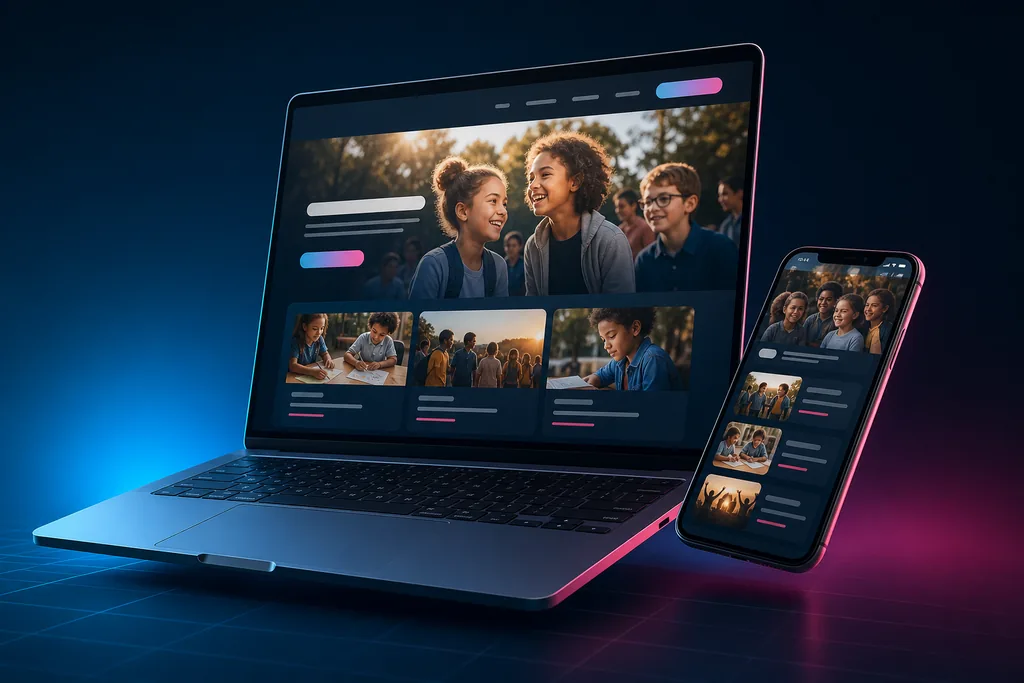
The phrase “church website” covers wildly different things. To one congregation it means a single page with service times, an address, and a phone number. To another it means a full ministry platform: a plan-your-visit page that answers a nervous newcomer’s unspoken questions, an online-giving flow that works in under a minute on a phone, a sermon archive browsable by series and speaker, a livestream page that starts on time, an events calendar for VBS and potlucks, and ministry pages for the groups that define the church. Those two projects share a name and almost nothing else — which is exactly why quotes for church websites range from a few dollars a month to five figures. Before you can judge a price, you have to know which of those you’re actually buying.
The useful way to think about cost isn’t “cheap versus expensive.” It’s how much of the welcome-and-connect work is included — because that work is where a church site either grows the congregation or sits idle as a digital signpost. A template can give you a tidy homepage in an afternoon. It cannot, on its own, build the parts that turn a Saturday-night searcher into a Sunday visitor or a member’s good intentions into a recurring gift. That gap is the whole story of church-website pricing, and it matters here because most of what a church spends is given money, entrusted for the mission.
What Actually Drives a Church Website’s Price
A restaurant site is priced by its menu and photos; a dentist’s by services and locations. A church site is priced by a specific set of moving parts built around two jobs at once: welcoming a visitor who hasn’t decided yet, and keeping a congregation connected between Sundays. These are the cost drivers unique to this niche:
- A plan-your-visit page that removes every unknown. Service times, directions and parking, what to wear, how kids check-in works, what to expect in the first ten minutes — written for the nervous newcomer. It’s the highest-converting page a church can have, and building it well is a real cost driver, not filler.
- Online giving that honors the giver’s trust. Not a “Donate” button that dumps a member on a generic page, but a fast, embedded flow tied to a church giving platform (Tithe.ly, Pushpay, Givelify, Planning Center Giving) with recurring gifts, fund designations, and the card data staying with the processor rather than your site.
- A sermon archive organized like a library. Video and audio embedded on your own site, browsable by series, speaker, date, and scripture passage — so a traveling member can catch up and a seeker can hear your actual preaching before visiting. Structuring that properly is a build, not a plugin drop-in.
- A livestream page and an events calendar someone can maintain. A watch-live page with this week’s times and the recent archive below it, plus a calendar the church office can update in minutes without a developer — because a calendar that’s wrong once gets ignored forever.
- Ministry, staff, and multi-campus pages. Pages for kids, youth, worship, and small groups, warm staff bios with real photos, and — for multi-site churches — a page per campus with its own times and address. Each adds to the scope and moves the price.
Strip those away and you have a business-card website any builder can produce for almost nothing. Include them properly and you have the thing that actually welcomes visitors and connects members — the version worth paying for, and the version this church website design page describes in full.
The Real Market: DIY, Freelancer, Agency, or Specialist
Here’s the honest landscape for a church website, described the way the market actually works rather than with invented figures. Each route buys a different mix of price, control, and how much of the welcome-and-connect work lands back on a stretched staff or a volunteer squeezing it in after a full week.
DIY builders and church-platform templates
A low monthly subscription — often discounted for churches, and sometimes bundled into a church-software or giving-platform fee — and your team does the building. Fine as a placeholder for a brand-new church plant. But the plan-your-visit page, the giving embed, the sermon uploads, and the calendar remain a second unpaid job for a volunteer or an already-stretched staff member. Templates rarely produce a giving flow that holds a member’s attention on a phone, and a half-configured page quietly loses visitors and gifts you’ll never know you lost. The sticker price is the lowest; the opportunity cost — in volunteer hours and missed newcomers — is the highest, and the site ages exactly as well as volunteer availability.
Freelance designers
Commonly a one-time mid four-figure project fee. You get a custom site and a human who understands design. The catches are structural: hosting is usually separate, and every post-launch change — Christmas and Easter service times, a new sermon series page, VBS registration — is billed as it comes. Churches change their sites in seasonal bursts, so those edits add up quietly across a year. Availability matters too; a solo freelancer booked solid the week before Easter is a real risk to your biggest attendance window.
Agencies
Frequently five figures, priced for large multi-site churches with a communications director and a dedicated media budget. You get a team, a process, and polish — and a price and pace that assume overhead most congregations don’t have. For a lean local church funding the site out of the general fund, an agency build is often more site than the moment calls for, with a maintenance retainer on top that recurs every year — a sanctuary-roof number for most budgets.
A specialist on a flat monthly plan
The model built for how churches actually operate. Instead of a large upfront project fee plus surprise invoices at every season change, the whole site — custom design, plan-your-visit and ministry pages, giving and livestream integration, sermon archive, events calendar, hosting, security, maintenance, and ongoing updates — is one predictable monthly plan a board can approve without a capital campaign. It trades the big one-time number for a small recurring one that already includes the parts freelancers and agencies bill separately, so the site never depends on which volunteer is available this season. This is the WebEngine model, and it’s why updating Easter service times is an edit instead of an invoice.
The Streaming License: A Church Cost Nobody Quotes You
Here’s a cost specific to churches that rarely appears on a web quote and catches congregations by surprise. Most churches know about CCLI or a similar copyright license — it’s what lets you project song lyrics and perform copyrighted worship music in your services. What many don’t realize is that performing a song in the sanctuary and transmitting it over the internet are different rights. The moment your worship set is livestreamed, archived on your website, or uploaded to YouTube, you’re distributing a recorded performance of copyrighted music — a use the standard in-service license typically does not cover on its own.
That’s why providers offer a separate streaming license (CCLI’s streaming license is the one most churches encounter) that covers webcasting the songs you already report. It’s a real, recurring line in the true cost of a church that streams — and skipping it usually surfaces the hard way: muted audio on the YouTube archive, copyright claims against the channel, or takedowns of months of sermons over four minutes of music. We build the livestream and archive pages and structure the archive so a flagged worship set never takes your sermon library down with it; confirm your specific coverage with your licensing provider, because we build websites, not legal opinions.
What’s Usually Included — and What Quietly Isn’t
The cheapest quote and the fairest quote can look identical until you read what’s inside. When you compare church-website prices, check each one against this list — the gaps are where a low number hides future cost, lost visitors, and missed gifts:
- A plan-your-visit page with service times, directions, parking, kids check-in, and what to expect — written for the newcomer, not the member.
- An embedded online-giving flow tied to a church giving platform, with recurring gifts and fund designations, and card data kept with the processor.
- A sermon archive browsable by series, speaker, date, and scripture — with video and audio on your own site, not buried in a reverse-chronological pile.
- A livestream page with this week’s times and the recent archive directly below it.
- An events calendar the church office can update in minutes, plus registration for VBS, retreats, and holiday services.
- Ministry, staff, and multi-campus pages with real photos of your people, because visitors are asking “are there people like me here?”
- Accessibility and mobile speed, since the Saturday-night search and the offering-time gift both happen on phones.
A quote that includes only a service-times page and a contact form and calls itself a “church website” isn’t wrong — it’s just a different, smaller product that won’t welcome a visitor or take a gift on its own. Knowing the full list lets you compare like with like, and it’s the same standard every build on our web design service is held to.
The Ongoing Costs Nobody Quotes You Upfront
The build price is only half the picture. Every church website carries recurring costs whether or not they appear on the first invoice — and for churches the ongoing side matters, because a lost visitor or a missed gift is ministry that never happens:
- Hosting, domain, and SSL — the standing rent of being online, non-negotiable for any page that touches giving.
- Software, security updates, and backups — a neglected site is a hacked site, and a compromised church page is a trust catastrophe you can’t easily undo.
- Giving-processing fees — a percentage of every online gift, taken by the giving platform regardless of who built the page around it.
- The streaming license — a recurring cost to lawfully webcast worship music, covered above and easy to forget until a takedown notice arrives.
- Seasonal changes — Christmas and Easter times, VBS registration, new sermon series, staff transitions. With freelancers and agencies these are billed by the hour; across a church year they can dwarf the original build.
This is the hidden math that makes a cheap upfront build expensive over time, and an all-inclusive monthly plan the more honest deal for a congregation. WebEngine folds hosting, security, maintenance, and those seasonal updates into the plan, and handles new-series and holiday changes through website support — so the number your board approves is the number you pay.
Church Website Cost FAQs
How much does a church website cost?
It depends on who builds it and how much of the church-specific work — a fast online-giving flow, a searchable sermon archive, a livestream page, and an events calendar a volunteer can actually maintain — is done for you versus left on someone’s desk. DIY builders charge a low monthly subscription but leave all of that to a volunteer. Freelancers typically quote a mid four-figure upfront fee. Agencies can reach five figures, with hosting and every future edit billed on top. WebEngine builds church sites on one flat monthly plan with hosting, maintenance, and a live review widget included — full details on our Web Design page.
Why do church website quotes vary so much?
Because “church website” describes everything from a one-page service-times card to a full ministry platform. A simple about-and-directions site is cheap. A site with a plan-your-visit page, embedded online giving, a sermon archive browsable by series and speaker, a livestream page, and an events calendar the office can update is a different project with a different price. Most of the spread in quotes comes from how much of that welcome-and-connect machinery is actually included versus quietly left for a volunteer to figure out.
Can a church get a website for free or cheaply?
A free or near-free start is fine for a brand-new church plant, and there are real discounts — many builders and giving platforms offer reduced church rates, and some bundle a basic site into their software fee. But “free platform” is not the same as “free website.” You still supply the design, the giving setup, the sermon uploads, and the ongoing upkeep, and the giving processor still takes a percentage of each gift no matter who built the page. The cheap start usually means a volunteer inherits the site forever — and it ages exactly as well as that volunteer’s availability.
What ongoing costs come with a church website?
Every church site has recurring costs whether they’re bundled or not: hosting, a domain, SSL, software and security updates, backups, and the processing fees taken from each online gift. There’s also a cost specific to churches — a streaming license (such as CCLI’s) to lawfully webcast copyrighted worship music. And churches change their sites in seasonal bursts: Christmas and Easter service times, VBS registration, a new sermon series, staff changes. With freelancers and agencies those edits are billed hourly. WebEngine folds hosting, maintenance, and those updates into one flat monthly plan.
Is spending on a website a responsible use of church funds?
It is when the site does its job. The website is how a nervous first-time family decides whether to walk in, how a traveling member catches the sermon, and how a good part of your congregation now gives — so it’s rarely overhead to apologize for. The responsible move is avoiding both extremes: a free template that quietly loses visitors at a confusing plan-your-visit page and members at a clunky giving flow, and a five-figure build that costs a sanctuary repair. A predictable monthly plan keeps the cost small, visible, and easy to defend at a stewardship meeting.
The Simplest Answer to “What Will It Cost Us?”
One flat monthly plan that includes the whole ministry platform — plan-your-visit and ministry pages, online giving, a searchable sermon archive, a livestream page, an events calendar, hosting, and every seasonal update — with no five-figure quote and no surprise invoices when Easter times change. It’s a line a board can approve at a glance and defend at a stewardship meeting as mission spending, not overhead. See exactly what’s included on the Web Design page, or explore the full church website design service to see how the pieces fit together. Related mission-driven fields: nonprofit website design and school website design.
New Business Website
A professional website built for your business — design, hosting, security, and reviews handled for you.
- Custom professional design
- Hosting & security included
- Mobile-first & fast
- Live review widget built in
Website Support
Already have a website? We keep it updated, secure, fast — and make your changes for you.
- Updates, backups & security
- Content edits done for you
- Speed & uptime monitoring
- Works with sites we didn’t build