
How Much Does a Catering Website Cost?
A catering website ranges from a low monthly subscription for a DIY builder you run yourself, to a mid four-figure one-time project from a freelancer, to a large monthly retainer from an event-marketing agency. But the sticker price matters far less than what the site actually does: a site that captures a wedding inquiry with the date, headcount, and menu style already filled in is worth a season of bookings, while a pretty page with a bare contact form quietly loses events every week. WebEngine builds the whole inquiry engine — quote-request forms, menu and package pages, gallery, and event-type landing pages — plus hosting and maintenance on one flat monthly plan.
What Actually Drives the Price for a Caterer
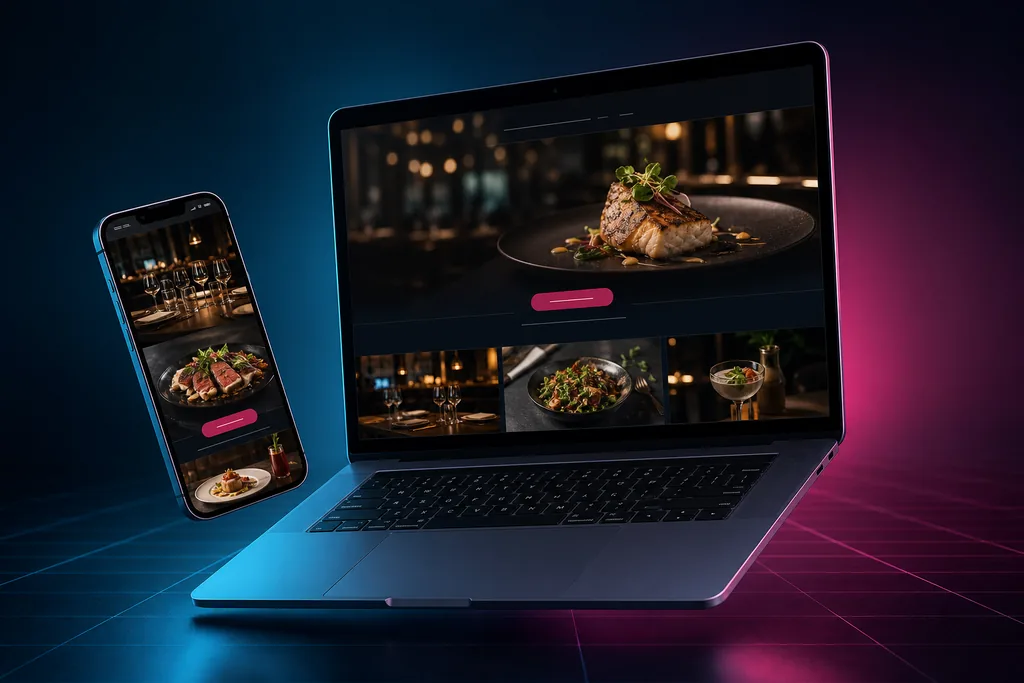
A catering website isn’t a menu taped to a window — it’s the place a bride, an office manager, or a grieving family decides whether to trust you with the single most important meal of their event. The parts that build that trust and turn a browser into a booked event are exactly the parts that move the price. Knowing what you’re really paying for is the difference between overpaying for a beautiful gallery that captures no leads and underpaying for something that never fills your calendar during peak season.
The single biggest cost driver is the inquiry and quote-request flow. Caterers don’t sell off a fixed price list — every event has a different date, headcount, venue, dietary mix, and service style, so a generic “contact us” box is nearly useless. A site that converts asks the right questions up front — event type, date, guest count, budget range, dietary needs — so the lead that lands in your inbox is already qualified and half-quoted instead of a one-line “how much for a party?” that takes three emails to pin down. Building that structured intake, wiring it to your email and calendar, and making it feel effortless for a stressed client is where real budget goes, and it’s the one thing a cheap template almost never includes.
The second driver is appetite architecture. Nobody books catering they can’t picture. That means genuinely appetizing photography shown at full size, menus and packages laid out so a corporate planner and a wedding couple each find the option written for them, and event galleries that let a prospect imagine their own day. A generalist template gives you a thumbnail grid and a PDF menu link; a catering site that closes events is built so every scroll makes the food look worth the deposit.
The features a caterer specifically pays for
- A structured quote-request form that captures event type, date, headcount, budget, and dietary needs — so every lead arrives pre-qualified instead of a vague “how much?”
- Menu and package pages organized by event and service style — plated dinners, buffets, drop-off, cocktail receptions — each framed for the client who’s buying it.
- A real event gallery with high-resolution food and tablescape photography, because catering is bought with the eyes long before the taste.
- Event-type landing pages — weddings, corporate, funerals, holiday parties — because a couple and an office manager search differently and need different reassurance.
- Dietary and allergen clarity — vegan, gluten-free, kosher, halal options surfaced plainly — because one unanswered dietary question kills a booking before you ever hear from them.
The Real Market: Four Ways to Buy
There’s no single “catering website price” because there are four genuinely different products being sold, and each one trades money for time, control, and booked events in a different way.
DIY builders
The cheapest path on paper — a low monthly subscription for a drag-and-drop builder. The catch is that the price only buys the empty canvas. The structured quote form, the menu-and-package layout, the event-type pages, the gallery that does your food justice, and the local SEO that gets you found for “wedding catering near me” are all left to you — at midnight, after a fourteen-hour event, while your competitor’s site is already capturing the inquiry. For a caterer whose peak season is brutal and whose slow season is when you finally have time to build, “free to build” quietly becomes the most expensive option once you count the events that booked someone else while your site sat half-finished.
Freelancers
A freelance designer typically quotes a mid four-figure one-time project for a custom catering site. You get something built for you, which is a real step up — but that number is a range, not a promise, and it usually covers the build only. Hosting, the seasonal menu swap you need every quarter, the “can you add photos from Saturday’s wedding” requests, and the new holiday-party package you want live by October are separate, billed hourly later or quietly never done. Quality also swings enormously between freelancers, and a genuine catering intake — the structured quote form, the event-type pages, the allergen clarity — is not something every generalist designer has built before.
Event-marketing agencies
Agencies that specialize in events and hospitality bundle the website into a large monthly retainer alongside ads, social, and lead management. When it works, it works — but it’s the top of the market, priced for caterers already spending heavily on paid growth, and the website is usually one line item you can’t cleanly separate from the rest of the spend.
The transparent monthly-plan model
This is where WebEngine sits, deliberately. Instead of a five-figure retainer or a one-time project that decays the day it launches, your entire inquiry engine is built and maintained on one flat monthly plan — the structured quote form, menu and package pages, event-type landing pages, gallery, hosting, and ongoing maintenance all included, with no surprise invoice when you swap the seasonal menu or add photos from last weekend’s event. You get done-for-you agency quality without the retainer, and you never own a site that slowly rots because updating it costs extra. See exactly what’s included on our Web Design page.

New Business Website
A professional website built for your business — design, hosting, security, and reviews handled for you.
- Custom professional design
- Hosting & security included
- Mobile-first & fast
- Live review widget built in
Website Support
Already have a website? We keep it updated, secure, fast — and make your changes for you.
- Updates, backups & security
- Content edits done for you
- Speed & uptime monitoring
- Works with sites we didn’t build
What’s Usually Included (and What Isn’t)
Two quotes can look wildly different in price and be quoting completely different things. Before comparing numbers, compare scope. A catering website that actually books events usually needs all of the following — the only question is whether it’s in the price or billed later.
- Design and build — the pages, the mobile layout, and the brand that makes your food look worth a wedding deposit.
- The structured quote-request flow — often the single line that separates a real quote from a cheap one, and the difference between qualified leads and vague inquiries.
- Menu and package pages for every service style — plated, buffet, drop-off, cocktail — each framed by the event it serves.
- A proper photo gallery built to show high-resolution food and tablescapes, not shrink them into a muddy grid.
- Local SEO groundwork — the on-page structure that helps couples and planners find you when they search for catering in your city.
- Copywriting that sounds like your kitchen and speaks to the specific event each client is planning.
What’s frequently not included in a low bid: the structured intake form, the event-type pages, the local SEO, the copy, and any maintenance after launch. When a catering website looks suspiciously cheap, one of those is almost always missing — and they’re the ones that decide whether it books events or just sits there looking hungry. For caterers weighing a full build against ongoing help with a site they already have, our website support option covers the maintenance side on its own.
The Ongoing Costs Nobody Quotes You
The build price is only the first number. A catering site is a seasonal, living thing — you swap menus for the holidays, add photos from every standout event, launch a new corporate lunch package, adjust pricing tiers, and the software underneath needs updating whether you touch it or not. These recurring costs are real no matter who builds the site; the only question is whether they’re bundled or they land on you piecemeal.
Hosting and domain
Every site needs a place to live and an address. On a DIY builder this is folded into the subscription; with a freelancer it’s usually a separate account you manage and renew yourself. A catering site heavy with high-resolution food photography loads slowly on cheap, overloaded hosting — and a planner comparing three caterers on her phone won’t wait for your gallery to appear before moving to the next tab. Fast hosting is a false economy to skimp on for a business sold on first impressions.
Maintenance and seasonal updates
This is the cost that quietly separates a site that keeps booking from one that stalls. Plugins and platforms need security updates. Your holiday catering menu needs to be live in September, not December. The photos from Saturday’s gorgeous wedding need to hit the gallery while they’re fresh and the couple will happily share them. Freelance builds usually bill this hourly, which is exactly why so many catering sites end up frozen with last spring’s menu and a gallery that stops at 2023 — every edit has a price tag, so nobody makes them, and the site slowly stops matching the kitchen.
The flat monthly model exists precisely to kill this friction. Hosting, security, plugin updates, and the routine menu-and-gallery changes a caterer actually makes are all inside one predictable number — so the site stays current because keeping it current doesn’t cost extra. Compare that against a mid four-figure build plus a hosting bill plus hourly edits, and the “cheaper” project frequently ends up costing more over two years while doing less. You can see the full picture, and every industry we build for, on our catering website page.
Catering Website Cost FAQs
How much does a catering website cost?
It depends entirely on who builds it and what’s included. A DIY builder is a low monthly subscription but leaves the structured quote form, event-type pages, gallery, and local SEO to you. A freelancer typically quotes a mid four-figure one-time project for the build alone. Event-marketing agencies fold the site into a large monthly retainer. WebEngine builds the full inquiry engine — quote form, menu and package pages, gallery, hosting, and maintenance — on one flat monthly plan; the details are on our Web Design page.
Why is one catering website quote so much cheaper than another?
Almost always because it’s quoting less. The cheapest bids usually leave out the structured quote-request form, the event-type landing pages, a gallery that does your food justice, the local SEO, and any maintenance after launch — the things that actually decide whether the site books events. Before comparing prices, line up scope: a template with a bare contact box and a done-for-you inquiry engine are different products that both happen to be called “a website.”
Do I really need more than a menu PDF and a contact form?
If you want to book events, yes. A menu PDF and a “contact us” box put all the work on the client and hand you a vague inquiry that takes three emails to quote. A structured form that asks event type, date, headcount, budget, and dietary needs qualifies the lead before it reaches you, and event-type pages plus a strong gallery answer the questions that make a planner comfortable enough to reach out at all. That difference is what separates a site that looks nice from one that fills your calendar.
What ongoing costs should I expect after the site launches?
Hosting, a domain, security and software updates, and the routine seasonal changes a caterer always needs — swapped holiday menus, fresh event photos, new packages, and updated pricing tiers. With a freelance build these are usually separate and often billed hourly, which is why so many catering sites freeze with an outdated menu a year in. A flat monthly plan bundles hosting, maintenance, and routine updates into one predictable number so the site keeps pace with your kitchen.
Does a more expensive website actually book more events?
Not automatically — price and performance aren’t the same thing. A well-built site of any budget books events because of what it does: a structured quote flow that qualifies leads, photography that makes the food irresistible, event-type pages that reassure the specific client, and clear dietary and package information. A pricey site missing those still underperforms. Spend on the inquiry engine and the gallery, not decoration, and judge any quote by whether it includes the structured form — not by the size of the number.
Ready to build the inquiry engine?
Get a catering website with the structured quote form, menu and package pages, and event gallery built in — on one flat monthly plan.
Start My WebsiteAlready have a site with a stale menu?
Keep it fast, current, and capturing inquiries with ongoing help instead of hourly invoices.
Get Website Support