
How Much Does a Food truck Website Cost?
A food truck website ranges from a few dollars a month for a DIY builder you set up yourself, to a mid-four-figure or higher one-time project with a freelancer or agency, plus ongoing hosting and upkeep. What you actually pay comes down to one thing: whether the site is a static flyer, or a living tool that shows today’s location, a phone-friendly menu, and a way to book you for events. WebEngine skips the big upfront invoice and builds that living site on one flat monthly plan — hosting, maintenance, and a live review widget included.
What Actually Drives the Price of a Food Truck Website
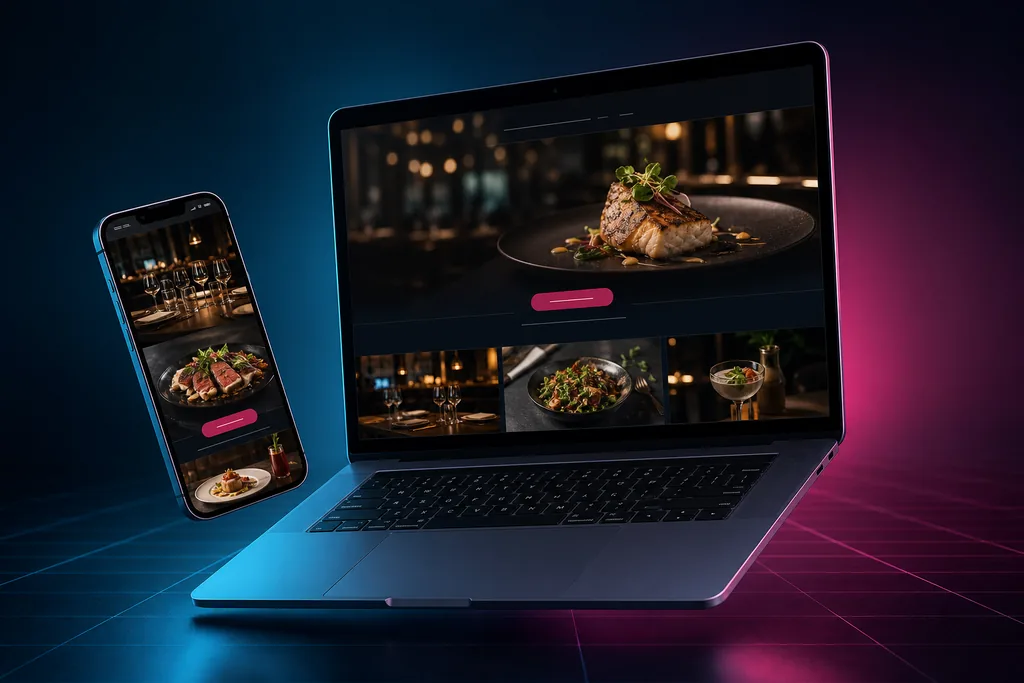
The number on a food truck web-design quote has almost nothing to do with page count and almost everything to do with how much work the site is asked to do in the real world. A food truck is not a fixed storefront — you move. Your customers’ first question is never “what’s on the menu,” it’s “where are you right now, and will you be at the brewery on Friday?” A site that can’t answer that is a brochure; a site that can is a tool your regulars check on their phone every week. That difference is where the money genuinely goes, and it’s why two quotes for “a food truck website” can be worlds apart while both being honest.
Food trucks also carry a demand mix no restaurant shares: most of your revenue comes from the daily curbside crowd, but the fat margins come from private events, festivals, and catering — weddings, office lunches, brewery takeovers. A site has to serve both at once. Here is where the budget actually lands for a truck specifically.
A location and schedule that customers can trust
This is the single most food-truck-specific line item, and the one cheap builds fumble hardest. Your visitors need to know where you’ll be today and this week, and they need that answer to be current — a stale “find us on Instagram” link sends people to a competitor. Whether it’s a simple weekly schedule you can edit from your phone between services, a live location callout, or a map embed, building something you’ll actually keep updated (and that loads fast at the curb on a weak signal) takes real thought. Get it wrong and every out-of-date entry trains regulars to stop checking.
A mobile-first, easy-to-change menu
Nearly all of your traffic is someone standing in line or deciding whether to walk over, on a phone, in the sun. The menu has to load instantly and read cleanly on a small screen — a PDF menu is a conversion killer. Food trucks also change specials, run out of items, and rotate seasonal dishes constantly, so a menu you can edit yourself in seconds is worth far more than a beautiful one you have to email a developer to touch. That editability is a real design decision, not a free default.
Event booking and catering inquiries
This is where the profit is, and where a cheap site quietly leaks it. A clear catering and private-events page with a proper inquiry form — one that captures date, headcount, location, and event type — is the difference between a wedding gig and a missed DM. Routing those inquiries so you actually reply fast takes setup. A generic “contact us” box treats a high-value catering lead the same as a menu question, and the good leads slip through.
Photos, social proof, and local search
Food is bought with the eyes, so strong photography and a site that shows off your rig, your line, and your dishes does heavy lifting. Layering in real reviews, an Instagram feed, and clean local SEO so “food truck near me” and your city’s festival searches find you all takes structure and content work. A template stuffed with stock burger photos costs nothing and converts like nothing, because hungry locals can tell the difference between your truck and a clip-art one.
The Real Market: DIY vs Freelancer vs Agency vs Specialist
There is no single “food truck website price,” because there are four very different ways to get one. Each trades money against your time — and against how much of the schedule-updating, menu-editing, and catering-lead work lands back on you between services. Here’s the honest landscape, in plain terms.
DIY website builders
The cheapest option on paper — a low monthly fee for a drag-and-drop builder. But you become the designer, the copywriter, the photographer, and the person keeping the schedule current at 6am before a service. Plenty of trucks start here, and for a one-page “we exist, here’s our Instagram” placeholder it’s fine. The moment you want a menu that’s easy to update, a catering form that actually converts, and a schedule people trust, a generic template quietly fights you. The subscription is small; the events you never get booked for are not.
Freelancers
A freelance designer or developer typically charges a project fee in the mid-four figures for a custom food truck site. You get a real designer and a site tailored to your brand — but the relationship usually ends at launch. Ongoing hosting, menu changes, schedule updates, and fixes when the catering form breaks are often extra or left to you, and quality swings a lot depending on whether the freelancer has ever built for a mobile, always-moving business or just makes things look modern.
Full-service agencies
A full agency delivers the most polished result and the biggest invoice — commonly five figures up front, sometimes with a monthly retainer on top. For a multi-truck fleet or a growing catering operation with real budget, that can make sense. For a single truck working farmers markets and brewery lots, it’s usually far more overhead than the stage requires — you’re paying enterprise pricing for a business run out of a serving window.
Productized specialists
The newer model — and where WebEngine sits — is a specialist that has already built the schedule-and-catering-ready food truck site many times over and turns it into a repeatable, flat-monthly service. You skip the large upfront project fee entirely. Instead of guessing what a truck-ready site should cost, you pay one predictable monthly figure that includes the build, hosting, maintenance, and a review widget. For an owner watching cash flow between seasons, the transparent monthly plan is the payoff: no surprise invoice, no separate hosting bill, no “that’s an add-on” every time you need a menu tweak. You can see the exact plan on our web design page.

New Business Website
A professional website built for your business — design, hosting, security, and reviews handled for you.
- Custom professional design
- Hosting & security included
- Mobile-first & fast
- Live review widget built in
Website Support
Already have a website? We keep it updated, secure, fast — and make your changes for you.
- Updates, backups & security
- Content edits done for you
- Speed & uptime monitoring
- Works with sites we didn’t build
What’s Usually Included — and What Quietly Isn’t
The trap in comparing food truck website prices is that “a website” means wildly different things at each level. A cheap quote and an expensive one can both be honest — they’re just quoting different products. Before you compare numbers, compare what’s actually in the box.
- Design and build — the pages themselves. Always included, but “included” ranges from a stock template to a custom layout built around your truck’s brand and food.
- Location and schedule tool — the most food-truck-specific feature, and often the biggest hidden gap. Cheaper builds leave you pointing to Instagram; a real site shows where you are this week and lets you update it yourself.
- An editable, mobile-first menu — one you can change in seconds when specials rotate or an item sells out. Many quotes hand you a static menu you can’t touch without a developer.
- Catering and events page with a real inquiry form — capturing date, headcount, and location. Frequently underscoped into a generic contact box that treats a wedding lead like a menu question.
- Photography and gallery layout — space designed to make your food look as good as it tastes. Often assumed to be supplied by you.
- Local SEO and social integration — so “food truck near me” finds you and your Instagram feed stays live on the page. Regularly a paid add-on or omitted.
- Review and trust display — a live review widget that shows real customer proof to someone deciding whether to walk over. WebEngine includes one; most builders don’t.
When two quotes look far apart, the difference is almost always in this list — not in the visible design. A food truck site that skips the schedule tool and a real catering form isn’t cheaper; it’s just doing less of the job that actually books events and keeps regulars coming back.
Ongoing Costs: Hosting, Maintenance, and the Long Tail
The upfront number is only half the story. A food truck site is a living asset — it needs a server to live on, software kept current, security patches, backups, and the occasional fix when an update breaks the catering form or the schedule stops showing. For a truck, a broken booking form during festival season is a direct hit to your best-paying gigs, so these aren’t optional line items.
Hosting
Every site needs hosting, billed monthly or yearly. On a DIY builder it’s bundled into the subscription. With a freelancer or agency build, it’s usually a separate bill you set up and manage yourself — and for a truck whose customers pull up the menu on a phone in a gravel lot, a slow or flaky host quietly costs you the walk-up sale exactly when someone’s deciding whether to get in line.
Maintenance and updates
Someone has to keep the software patched, renew the security certificate, take backups, and handle the constant small changes a truck needs — this week’s schedule, a sold-out special, a new seasonal item, next month’s festival lineup. Freelancers often charge hourly for this after launch; agencies bundle it into a retainer. If nobody owns it, the site slowly rots until the catering form silently fails — the worst possible failure for a business whose fattest margins come through that form.
This is exactly where the flat-monthly model earns its keep. Instead of a large build fee plus a separate hosting bill plus surprise maintenance invoices, WebEngine folds hosting, updates, security, and support into one predictable figure — the same amount every month, whether or not anything breaks. For an owner juggling seasonal cash flow, that predictability is worth as much as the site itself. When something needs a human, our website support team handles it, and every build starts from our food truck web design foundation.
So, How Much Should You Actually Budget?
If you want a genuinely effective food truck site — one that shows where you’ll be, serves an easy-to-change mobile menu, books catering and events, and gets found in local search — the DIY route rarely delivers it once you’re serious about the season, and the freelancer or agency route means a significant upfront outlay plus ongoing bills you set up and manage yourself. The specialist route trades that upfront lump sum for a single, transparent monthly plan with everything bundled in. Which is “cheaper” depends less on the sticker and more on the true cost of your time between services and every catering lead a poorly built site quietly drops. See the exact WebEngine plan on our web design page.
Food Truck Website Cost — Common Questions
How much does a food truck website cost?
It ranges widely. DIY builders are a few dollars a month but leave the design, menu updates, schedule, and catering setup to you; freelancers commonly charge a mid-four-figure project fee; full agencies charge five figures and sometimes a retainer. WebEngine builds a schedule-and-catering-ready food truck site on one flat monthly plan with hosting, maintenance, and a review widget included — no large upfront fee. You can see the plan on our web design page.
Why does a food truck site cost more than a simple restaurant page?
Because it does more. A restaurant sits at one address; a truck moves, so the site has to answer “where are you today” with a schedule or location tool people can trust, on top of a mobile menu you can edit constantly and a catering form that captures real event details. That location-and-events work is the food-truck-specific cost driver a static restaurant page never needs.
Can I just use Instagram instead of a website?
Instagram is great for showing off food and posting where you’ll be, but it can’t rank in local search, host a proper catering inquiry form, or give a wedding planner a clean page to book from. Most successful trucks use both — a site that owns your schedule, menu, and event bookings, with social feeding into it. Relying on Instagram alone quietly caps the high-margin catering side of your business.
What ongoing costs come after the site is built?
Hosting, software updates, security patches, backups, and occasional fixes — plus the constant small changes a truck needs: this week’s schedule, sold-out specials, seasonal items, and festival lineups. Freelancers often bill these hourly; agencies fold them into a retainer. WebEngine bundles hosting, maintenance, and support into one flat monthly figure so there are no surprise invoices during your busiest season.
Is a DIY builder good enough for a single food truck?
For a bare “we exist” placeholder, it can be. Once you want a menu that’s easy to change, a schedule people actually trust, and a catering form that turns inquiries into booked events, a generic template quietly fights you — and you become the designer, editor, and updater on top of running the truck. The low subscription hides the events and walk-ups you never capture.