
How Much Does a Electrician Website Cost?
An electrician website generally costs more than a plain brochure site because it has to do a serious job well: capture a customer at a high-stakes moment — a dead panel, a burning smell at an outlet, a builder pricing a whole-home rewire — who is searching on their phone and ready to call the first electrician who looks licensed, trustworthy, and reachable now. In the market, a do-it-yourself builder is a small monthly subscription plus your own hours; a freelancer is typically a mid four-figure project fee with hosting and edits billed on top; a specialist agency’s custom, lead-ready build often runs into five figures upfront plus a retainer. WebEngine replaces all of that with one flat monthly plan — build, hosting, maintenance, and a live review widget included.

New Business Website
A professional website built for your business — design, hosting, security, and reviews handled for you.
- Custom professional design
- Hosting & security included
- Mobile-first & fast
- Live review widget built in
Website Support
Already have a website? We keep it updated, secure, fast — and make your changes for you.
- Updates, backups & security
- Content edits done for you
- Speed & uptime monitoring
- Works with sites we didn’t build
What Actually Drives the Price for an Electrician
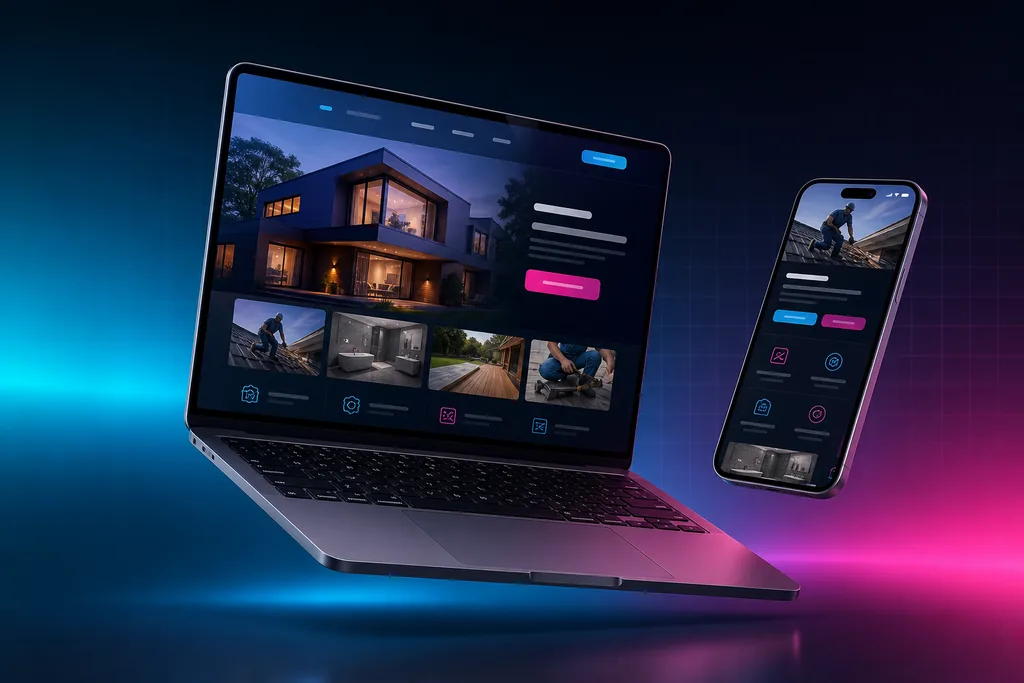
You can’t pull a clean number from a quick search because “electrician website” covers two completely different things. One is a business card online — a logo, a phone number, a line about being family-owned and licensed. The other is a working lead machine built for the exact moment a breaker won’t reset at 6pm, a homeowner smells something hot behind a switch, or a general contractor needs a bid on a panel upgrade this week. The gap between those two is where the cost lives, and almost all of it comes from features a generic small-business template never bothers to build.
Built for the high-stakes call, not the casual browse
This is the biggest single driver, because it shapes every design decision. A meaningful share of electrical revenue is urgent and anxious: a tripped main that won’t reset, flickering lights, a scorched outlet, power out to half the house. The searcher is worried about safety, on a phone, and comparing you against two competitors in the same thirty seconds. That means a tap-to-call button that lives in the thumb zone on every screen, an above-the-fold promise that you’re licensed and answer fast, and trust signals — license number, insurance, reviews, “we come to you” — visible before any scrolling. A brochure that buries the phone number in a footer is cheaper to build and quietly loses those calls to whoever made the phone easy.
A page for every service line
Electrical work isn’t one service, it’s a stack of them, and each has its own searcher with different urgency and budget. Panel and service upgrades, rewiring and wiring repair, EV charger installation, backup generator install, lighting and ceiling-fan work, outlet and switch repair, and 24-hour emergency electrical all deserve their own page — because “200 amp panel upgrade” and “EV charger installation” are different searches, different buyers, and different jobs. A single “Services” page lumping them together ranks for none of them well. Building each one out costs more than a one-pager and is the difference between showing up for the work you want and being invisible for it.
Service-area coverage across your whole radius
Electricians live and die by “near me” searches, and those are won town by town. If you cover a metro and its suburbs, each community you serve wants its own service-area page, so you appear when a homeowner in the next town searches for an electrician at 8pm. This is real content and structure work — not one page duplicated, but genuine local pages tuned for the local pack — and it scales the price more than any color or font choice ever will. It’s also the single highest-leverage thing separating an electrician site that rings the phone from one that just exists.
License, insurance, and trust where buyers look for them
Electrical work is regulated, permitted, and genuinely dangerous done wrong — so a customer about to let someone into their panel is checking whether you’re real, licensed, and insured before they dial. That means your license number and bonding shown plainly, live Google reviews on the page, the specialties you handle (residential, commercial, service upgrades, generators, EV), your service area drawn clearly, and financing options for bigger jobs like panel replacements and rewires. Each of these is a small build task, and skipping them is how a cheap quote stays cheap — by leaving off the exact things that turn a cautious searcher into a booked job.
The Real Market: DIY vs Freelancer vs Agency vs Specialist
Here’s the honest landscape in plain terms. Exact numbers vary by market and scope, but the patterns rhyme — and each option is really a different trade between money, your time, and how well the finished site fits the way electrical work actually comes in.
DIY website builders
The sticker price is a small monthly subscription, which is why it’s tempting. The hidden cost is your hours — the evenings you spend wrestling templates, service pages, and forms are evenings you’re not running calls or bidding jobs. DIY can produce a placeholder that proves you exist. It rarely produces a site that ranks for “electrician near me” across your service area or converts a worried emergency searcher, because those are exactly the things the builder leaves for you to figure out — and most electricians never get to.
Freelancers
A capable freelancer typically charges a mid four-figure project fee for a custom design. That can be fair value for the visual build, but read what’s excluded: hosting, ongoing local-SEO work, service-area pages, and every future edit are usually billed separately, and you’re depending on one person’s availability when the site goes down or you add a new town or specialty. The upfront number is only part of the true cost, and the parts that make an electrician site convert are often the parts quoted as “extra.”
Full-service agencies
Agencies that build custom, lead-ready home-services sites commonly quote five figures upfront plus an ongoing retainer. You’re paying for senior strategy and a team, and for a large commercial or multi-location electrical operation that can be the right call. For most independent and regional electricians it’s more than the job needs — and the retainer keeps running whether or not you used it that month.
Lead-generation and “free website” services
Some directories and lead brokers offer a cheap or “free” site in exchange for buying leads back from you, often the same leads they sell to three competitors down the road. It looks inexpensive upfront, but you never really own the site or the customer relationship, and you’re renting your own visibility at a per-lead markup. Cheap today, expensive and dependent tomorrow.
The specialist middle ground
Between the DIY floor and the agency ceiling sits the model most electricians actually want: a specialist who already knows the home-services playbook, builds the service-area pages, service-line pages, license and trust signals, and tap-to-call conversion elements as standard, and prices it predictably. That’s the gap WebEngine was built to fill.
What’s Usually Included — and What Quietly Isn’t
The number on a quote means little until you know what it covers. When you compare electrician website costs, check each proposal against this list, because the cheap ones win on price by leaving things off.
- Tap-to-call, everywhere — a click-to-call button in the thumb zone on every page, so an anxious searcher dials in one tap. Often missing from a low quote.
- Service-line pages — panel upgrades, rewiring, EV charger installs, generators, lighting, outlet and switch repair, and 24-hour emergency electrical, each ranking on its own.
- Service-area pages — a real page for every town you cover, so you win “near me” searches across your radius.
- Local SEO foundations — a tuned Google Business Profile and on-page structure aimed at the local pack, where electrical calls are won.
- Live reviews on the site — a widget showing real Google reviews where a cautious homeowner decides whether to trust you in their panel.
- License, insurance, and financing content — your license number and bonding shown plainly, plus financing for panel upgrades, rewires, and generator installs.
- Hosting, security, and mobile-first speed — frequently invoiced separately by freelancers and agencies, and non-negotiable for phone-first traffic.
Ongoing Costs: What a Live Site Needs Every Month
The upfront figure is only half the story. An electrician website is software that stays alive, and staying alive costs something no matter who built it. As the owner of the site, you carry these running costs one way or another:
- Hosting and SSL — a fast, secure home for the site, renewed continuously; speed matters most for the worried mobile searcher.
- Updates and security patching — the platform and plugins need patching; an unmaintained site is a liability and a Google ranking risk, not a saving.
- Content edits and growth — new service areas as you expand, new specialties like EV charging or battery backup, updated license numbers, financing offers, and seasonal promotions.
- Local-SEO upkeep — reviews, profile freshness, and new local pages are ongoing work, not a one-time launch task.
Buy an upfront build and these arrive as separate invoices you have to chase and approve. Fold them into a single plan and they become one predictable line item. That’s the difference between budgeting for a website and being surprised by one — and it’s why we bundle ongoing support into the plan rather than billing it à la carte. See Website Support for exactly what the ongoing side covers.
The WebEngine Model: One Flat Monthly Plan
We productized the whole thing. Instead of a five-figure invoice or a stack of separate bills, an electrician gets a custom professional website on one flat monthly plan — with hosting, security, ongoing maintenance, mobile-first design, tap-to-call conversion elements, service-line and service-area pages, license and trust signals, local SEO foundations, and a live review widget already inside the price. No per-edit billing, no lock-in, no surprise renewal. It’s a predictable line item, which is precisely how an electrical contractor would design a website if they built the business themselves. Everything included is itemized on our Web Design page, and the specifics of the electrician build live on our electrician website design page.
Electrician Website Cost FAQs
How much does a electrician website cost?
It depends on who builds it and what you need it to do. A do-it-yourself builder is a small monthly subscription plus your own evenings assembling service pages and a contact form. A freelancer usually charges a mid four-figure project fee, with hosting, click-to-call setup, and later edits billed on top. A specialist agency quoting a custom, lead-ready build often lands in five figures upfront plus a retainer. WebEngine takes a different route: one flat monthly plan that includes the build, hosting, maintenance, and a live review widget — the full breakdown is on our Web Design page.
Why does an electrician website cost more than a basic brochure site?
Because an electrician site earns its keep in specific, high-stakes moments — a homeowner with a dead panel, a burning smell at an outlet, or a builder pricing out a whole-home rewire. Building for that means tap-to-call in the thumb zone, separate service pages for panel upgrades, EV charger installs, rewiring, and emergency electrical, service-area pages for every town you cover, and clear license and insurance signals that reassure a nervous customer. A generic brochure skips all of that, which is exactly why it’s cheaper and why it doesn’t ring the phone.
Is a monthly plan cheaper than paying for an electrician website upfront?
Over the life of the site, a monthly plan usually costs less than the true all-in of an upfront build, because the upfront quote rarely includes hosting, security, ongoing edits, and the updates an electrical site needs as codes, services, and pricing change — those get billed separately. A flat monthly plan folds them into one predictable line item, which is how an electrical contractor would rather budget: no five-figure invoice, no per-edit surprises, no lock-in.
What ongoing costs should I expect after the site launches?
No matter who builds it, a live electrician site has running costs: hosting and SSL, software updates and security patching, and the edits you add over time — new service areas, new specialties like EV charging or backup generators, updated license numbers and financing offers. Buy an upfront build and those arrive as separate invoices. On the WebEngine plan, hosting, maintenance, and ongoing support are already inside the monthly price — see Website Support for how that works.
Do service-area and city pages raise the price?
They’re one of the main things that separates an electrician site that gets calls from one that just sits there, but they shouldn’t be a mystery add-on. Every town you cover deserves its own page so you show up when someone in the next suburb searches “electrician near me.” WebEngine treats service-area coverage as part of the build rather than a per-page upsell, so the monthly plan already accounts for putting you on the map across your whole service radius.
Explore More
Ready to see what’s included, or want the full picture on the industry build? Start with our web design services, read the electrician website design page, or browse related home-services fields like HVAC website design and plumber website design.
Get a Predictable Website Budget
Stop guessing what an electrician website should cost. Get a custom, lead-ready site on one simple monthly plan — hosting, maintenance, and reviews included — with the full breakdown on our Web Design page.
New Business Website
A professional website built for your business — design, hosting, security, and reviews handled for you.
- Custom professional design
- Hosting & security included
- Mobile-first & fast
- Live review widget built in
Website Support
Already have a website? We keep it updated, secure, fast — and make your changes for you.
- Updates, backups & security
- Content edits done for you
- Speed & uptime monitoring
- Works with sites we didn’t build