
How Much Does a Daycare Website Cost?
A daycare website can cost anywhere from a small monthly DIY subscription to five figures for an agency build — and the number depends almost entirely on how much of the childcare-specific work is done for you. The real drivers are an enrollment or waitlist inquiry flow, an honest page for each program and age group with tuition explained, a licensing-and-safety trust section a parent can verify, and a staff recruiting funnel. WebEngine builds all of that on one flat monthly plan with hosting, maintenance, and a live review widget included.

New Business Website
A professional website built for your business — design, hosting, security, and reviews handled for you.
- Custom professional design
- Hosting & security included
- Mobile-first & fast
- Live review widget built in
Website Support
Already have a website? We keep it updated, secure, fast — and make your changes for you.
- Updates, backups & security
- Content edits done for you
- Speed & uptime monitoring
- Works with sites we didn’t build
Why “How Much Does a Daycare Website Cost” Has No Single Answer
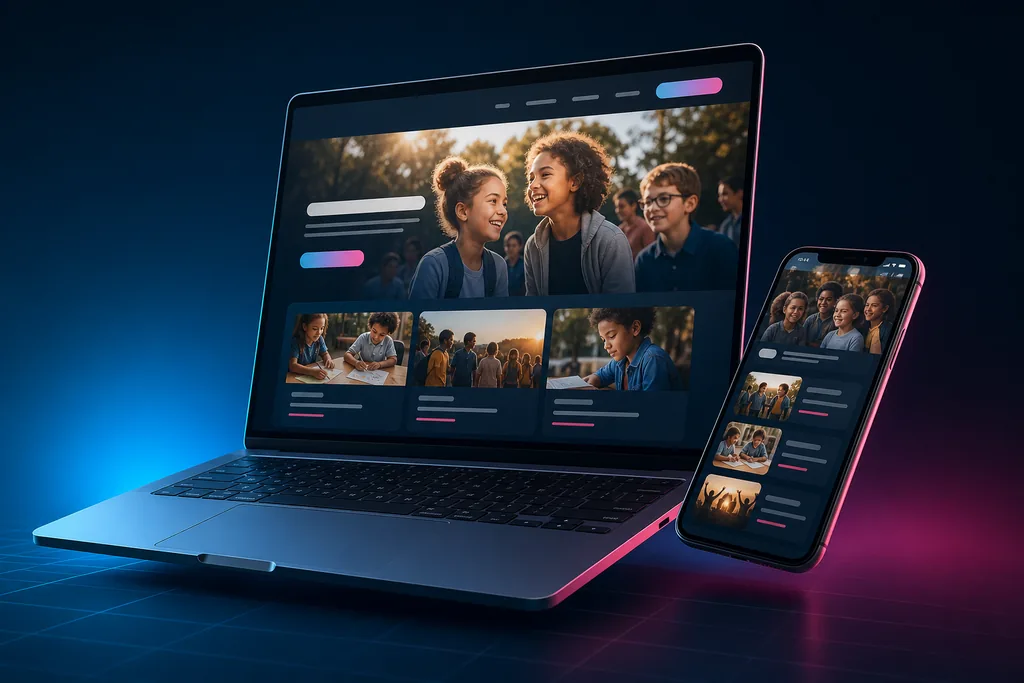
The phrase “daycare website” covers wildly different things. To one owner it means a single page with a cheerful classroom photo and a phone number. To another it means a full enrollment platform: a page for each program and age band, a curriculum or philosophy section, a school-year calendar, an honest explainer of tuition and what’s included, an enrollment or waitlist inquiry flow built for a parent filling it out one-handed during nap time, and a staff careers funnel running around the clock. Those two projects share a name and almost nothing else — which is exactly why quotes for daycare websites range from a few dollars a month to five figures. Before you can judge a price, you have to know which one you’re actually buying.
The useful way to think about cost isn’t “cheap versus expensive.” It’s how much of the childcare-specific work is included — because that work is where the site either fills classrooms and recruits teachers or just sits there looking friendly. A template can give you a warm homepage in an afternoon. It cannot, on its own, build the enrollment flow, the age-group structure, and the trust architecture that make a daycare site actually earn its keep. That gap is the whole story of daycare-website pricing.
What Actually Drives a Daycare Website’s Price
A restaurant site is priced by its menu and photos; a dentist’s by services and locations. A daycare or preschool site is priced by a specific set of moving parts that this industry — and the careful, protective parent it serves — genuinely needs. These are the cost drivers unique to childcare:
- An enrollment or waitlist inquiry flow. For most centers, the touring, waitlisted, or enrolling family is the whole business. A real inquiry flow — one that captures the child’s age and desired start date and routes it somewhere secure, rather than a bare contact form — is a genuine build, and it’s a leading cost driver here.
- A page per program and age group, with tuition explained honestly. Infants, toddlers, preschool, pre-K, and after-school care each need their own page explaining the daily rhythm, the ratios, and — plainly — how tuition is structured (weekly or monthly, what’s included, registration fees). Parents search by their child’s age, and the center that explains the schedule and price honestly earns trust before the tour.
- A verifiable licensing-and-safety trust section. Parents are handing you their child, so the site has to prove — not just claim — that the center is state-licensed, how staff-to-child ratios and background checks work, and what safety and sign-in procedures look like. Writing this specifically, rather than pasting “safe and nurturing,” is skilled work and a real cost driver.
- A curriculum, calendar, and daily-life section. Photos, a sample daily schedule, the curriculum or philosophy (Montessori, play-based, faith-based), and a school-year calendar are what a parent actually pictures their child living inside. Presenting them well — and keeping them current — is more page-building and image work than a typical small-business site.
- A staff and teacher recruiting funnel. Staffing is the constraint on every center’s capacity; you can’t enroll more children than you’re licensed and staffed to serve. A genuine careers section with honest scheduling and pay philosophy, current-teacher voices, and a short mobile application form is effectively a second website living inside the first — and it moves the price.
Strip those away and you have a flyer any builder can produce for almost nothing. Include them properly and you have the thing that actually fills classrooms and recruits teachers — the version worth paying for, and the version this daycare website design page describes in full.
The Real Market: DIY, Freelancer, Agency, or Franchise Template
Here’s the honest landscape for a daycare website, described the way the market actually works rather than with invented figures. Each route buys a different mix of price, control, and how much of the childcare-specific work lands back on your desk.
DIY website builders
A small monthly subscription, and you do the building. Fine as a placeholder while you finish licensing and open your doors. But the enrollment flow, the age-group pages, the tuition explainers, and the teacher funnel remain a second unpaid job squeezed between running the center and covering a classroom — and templates rarely produce a site that ranks for “daycare near me” or reassures a mother comparing three centers from her phone during a lunch break. The sticker price is the lowest; the cost is paid in the tours and enrollments the site never captures.
Freelance designers
Commonly a one-time mid four-figure project fee. You get a custom site and a human who understands design. The catches are structural: hosting is usually separate, and every post-launch change — open-spot availability, a new photo shoot, an updated calendar, a hiring push — is billed as it comes. Childcare centers update their sites more than most small businesses, so those edits add up quietly. And a freelancer without childcare experience may miss the age-group, ratio, and licensing nuances that make or break this niche.
Full-service agencies
Frequently five figures, priced for established multi-location operators with a real marketing budget. You get a team, a process, and polish — and a price and pace that assume a chain already at scale, usually with a monthly retainer on top. For a single center or a home-based daycare funding its own growth, that is often more site than the moment calls for.
Franchise templates and a flat monthly specialist
Franchise systems and childcare associations often supply a website as part of the arrangement, which solves the blank-page problem — but the site is usually templated, shared across every location in the network, thin on the local warmth parents look for, and rarely yours to control. The alternative built for how centers actually work is a specialist on a flat monthly plan: the whole site — custom design, enrollment flow, program and tuition pages, licensing-and-safety trust section, curriculum and calendar, careers funnel, hosting, security, maintenance, and ongoing updates — as one predictable monthly cost instead of a big upfront fee plus surprise invoices. It trades the large one-time number for a small recurring one that already includes the parts freelancers and agencies bill separately. This is the WebEngine model.
What’s Usually Included — and What Quietly Isn’t
The cheapest quote and the fairest quote can look identical until you read what’s inside. When you compare daycare website prices, check each one against this list — the gaps are where a low number hides future cost, and for this industry the gaps are usually the enrollment, tuition, and trust pieces:
- A real enrollment or waitlist inquiry flow — one that captures age and start date and routes it securely, not just a generic contact form.
- One page per program and age group with tuition explained honestly, not a single “Programs” grid.
- A verifiable licensing-and-safety section — state licensing, ratios, background checks, and sign-in procedures stated plainly, not “safe and nurturing” boilerplate.
- Curriculum, a sample daily schedule, and a school-year calendar that a parent can actually picture a child inside.
- A real careers section with an application form — the teacher and staff funnel most center sites skip entirely.
- A live review widget so current parents’ voices sit right where deciding families are reading.
- Mobile speed, accessibility, and readable type — nearly every parent is researching one-handed on a phone.
A quote that includes only the first line and calls itself a “daycare website” isn’t wrong — it’s just a smaller, different product. Knowing the full list lets you compare like with like, and it’s the same standard every build on our web design service is held to.
The Ongoing Costs Nobody Quotes You Upfront
The build price is only half the picture. Every daycare website carries recurring costs whether or not they appear on the first invoice — and for this industry the ongoing side matters more than most, because the inquiries are sensitive and the site keeps changing:
- Hosting, domain, and SSL — the standing rent of being online, and non-negotiable when parents are typing a child’s name and their own contact details into your enrollment forms.
- Software, security updates, and backups — a neglected site is a hacked site, and a center trusted with children cannot afford a defaced page or a leaked inquiry.
- Secure form or inquiry handling — enrollment requests and job applications contain personal information that belongs in encrypted handling, not a plain-text inbox.
- Ongoing changes — open-spot availability, new classroom photos, refreshed calendars and rates, seasonal hiring. With freelancers and agencies these are billed by the hour; over a few years they can dwarf the original build.
This is the hidden math that makes a cheap upfront build expensive over time, and an all-inclusive monthly plan the more honest deal for a working center. WebEngine folds hosting, security, maintenance, and those ongoing updates into the plan, and handles changes through website support — so the number you agree to is the number you pay.
Daycare Website Cost FAQs
How much does a daycare website cost?
It depends almost entirely on who builds it and how much of the childcare-specific work is included — an enrollment-and-waitlist inquiry flow, a page per program and age group with tuition explained honestly, verifiable licensing and safety trust signals, and a staff or teacher recruiting funnel. DIY builders cost a small monthly subscription but leave all of that to you. Freelancers commonly quote a mid four-figure project fee. Full agencies reach five figures with a monthly retainer, and hosting plus every edit is billed on top. WebEngine builds daycare and preschool sites on one flat monthly plan with hosting, maintenance, and a live review widget included — the full inclusion list is on our Web Design page.
Why do daycare website quotes vary so much?
Because “daycare website” describes anything from a one-page flyer to a full enrollment platform. A single photo and a phone number is cheap. A site with a page per program and age band, a tuition-and-schedule explainer, an enrollment or waitlist inquiry flow built for a parent researching at nap time, a licensing-and-safety trust section, and a working careers page is a completely different project. Most of the spread in quotes comes from how much of that childcare machinery is actually included versus quietly left out — and the missing pieces are usually the ones that fill classrooms.
Is a cheap DIY or free daycare website worth it?
For a placeholder while your license comes through, a DIY builder is fine. But the parts that make a daycare site earn — an enrollment inquiry flow, program pages a parent can compare by age, a trust section covering licensing, ratios, and safety, and a staff careers funnel — are exactly what a free template won’t build for you. Franchise- or association-supplied sites solve the blank-page problem but are usually shared across every location, rarely yours to control, and thin on the local warmth and detail parents look for. In both cases the low sticker hides the cost of the tours and enrollments the site never captures.
What ongoing costs come with a daycare website?
Every daycare site carries recurring costs whether or not they show on the first invoice: hosting, a domain, SSL, software and security updates, backups, and often the form or CRM handling enrollment inquiries and job applications. Because those inquiries contain a child’s name, age, and a parent’s contact details, secure handling matters more here than for a typical small business. On top of that, childcare sites change constantly — open-spot availability, new classroom photos, updated calendars and rates, seasonal hiring. With freelancers and agencies those edits are billed hourly. WebEngine folds hosting, maintenance, and updates into one flat monthly plan, with changes handled through website support.
Does a preschool cost more to build than a home daycare?
Usually a little more, because there are more moving parts to present — multiple age-group programs, a curriculum or philosophy section, a school-year calendar, and often a larger staff to recruit for. A home-based daycare has a smaller structure: one or two programs, a single caregiver’s story, and a simpler enrollment flow. The price tracks the number of program pages and conversion flows and how carefully the tuition, licensing, and safety sections are written — not the label on the door. Either way, a flat monthly plan that includes the whole structure tends to be the cleaner deal than a large upfront quote plus per-change invoices.
The Simplest Answer to “What Will It Cost Me?”
One flat monthly plan that includes the whole daycare platform — the enrollment and waitlist inquiry flow, program and tuition pages, licensing-and-safety trust section, curriculum and calendar, staff careers funnel, a live review widget, hosting, and every ongoing update — with no five-figure quote and no surprise invoices when you refresh your availability or run a hiring push. See exactly what’s included on the Web Design page, or explore the full daycare website design service to see how the pieces fit together.
New Business Website
A professional website built for your business — design, hosting, security, and reviews handled for you.
- Custom professional design
- Hosting & security included
- Mobile-first & fast
- Live review widget built in
Website Support
Already have a website? We keep it updated, secure, fast — and make your changes for you.
- Updates, backups & security
- Content edits done for you
- Speed & uptime monitoring
- Works with sites we didn’t build