
Coaching Website Design That Books Discovery Calls
A coaching or consulting website has one conversion that matters: the booked discovery call. It needs positioning a stranger grasps in seconds, a page for each program with a clear promise and honest proof, authority content that demonstrates your thinking, and a calendar link wherever a convinced reader happens to be standing. WebEngine builds all of it on one flat monthly plan — hosting, maintenance, and a live review widget included.
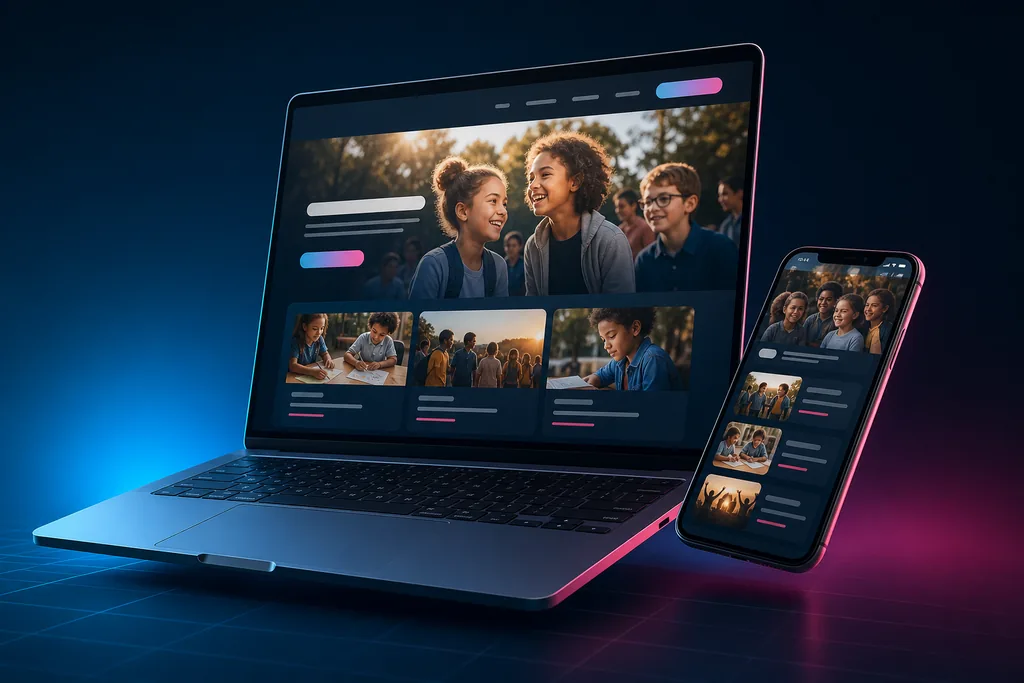

New Business Website
A professional website built for your business — design, hosting, security, and reviews handled for you.
- Custom professional design
- Hosting & security included
- Mobile-first & fast
- Live review widget built in
Website Support
Already have a website? We keep it updated, secure, fast — and make your changes for you.
- Updates, backups & security
- Content edits done for you
- Speed & uptime monitoring
- Works with sites we didn’t build
What a Coaching Website Actually Has to Do
You sell something invisible. There’s no storefront to walk past, no product photo to inspect, no fleet in a parking lot — just a claim that working with you changes someone’s business, career, or life. That makes your website carry more of the sales load than in almost any other industry: by the time a prospect books a call, the website has already done the convincing, or the call never gets booked.
Make the promise legible in five seconds
The single most common failure on coaching websites is a beautiful homepage that never says what you do. Visitors arrive from a LinkedIn post or a podcast mention with partial context, and they give you seconds. The headline has to name who you help and what becomes different for them — in their words, not coaching vocabulary. “Unlock your potential” tells a stranger nothing; “I help founders hire their first leadership team” starts a conversation.
Turn services into programs
Selling “coaching, by the hour, about whatever you need” makes every sale a custom negotiation and gives the website nothing concrete to sell. Programs fix that. A named engagement with a defined audience, duration, and outcome gets its own page, its own search presence, and its own proof — and lets the prospect arrive at the discovery call already knowing what they’re buying. Consultants get the same effect from defined engagement types: the diagnostic, the implementation project, the retainer.
Remove every step between conviction and the calendar
The moment a reader decides you might be the answer is perishable. If acting on it means finding a contact form, writing a message, and waiting for a reply, a meaningful share of decided buyers simply drift off. Embedded scheduling — a calendar on the page showing real availability — converts the moment it happens. Every program page, the about page, and the content hub should each end at a booking link.
Must-Have Features for a Coaching or Consulting Website
These are the components we build into every coaching and consulting site, because each one closes a specific gap between visitor and booked call.
Discovery-call booking that qualifies as it schedules
The booking flow should do quiet triage: two or three short questions — what they’re working on, business stage or role, what prompted the call — attached to the calendar booking. That keeps the call itself diagnostic rather than introductory, and filters the chronically curious from the genuinely ready without adding enough friction to lose anyone serious.
A program page per offer
Each program page follows a persuasion arc: the situation your client is in, what the engagement actually involves (people buy structure, not magic), who it’s for and not for, what changes by the end, and proof from someone who’s been through it. “Who it’s not for” is the most underused line in coaching copy — exclusion reads as confidence and improves the quality of every call you take.
An about page that sells without performing
In a personal-brand business the about page is a top-visited page, and most coaches waste it on false modesty or a wall of certifications. What persuades is the arc that qualifies you: what you did before, what you saw that made this work necessary, and why you’re built for this specific client. Credentials belong here as supporting evidence, not as the headline.
Proof handled with integrity — the part that separates real practices
Here is the industry-specific issue that deserves real depth. Coaching is largely unregulated — no license is required to call yourself a coach — and the industry’s loudest corner runs on screenshot income claims and manufactured urgency. Sophisticated buyers know this, which means your proof is read with active skepticism. Meanwhile, U.S. advertising rules genuinely apply: testimonials must be real and truthful, and marketing can’t imply that an exceptional client’s results are what a typical client should expect — earnings claims in the coaching world have drawn regulatory attention for exactly that pattern.
The answer isn’t less proof — it’s better proof. Named clients with real contexts. Specific, bounded outcomes (“restructured the leadership team in one quarter”) rather than unverifiable transformation language. Results framed with honest context instead of implied guarantees. We build proof sections that work precisely because a skeptical reader can verify them — and on anything that touches compliance, we’re clear that we build websites, not legal advice: claims that touch income or outcomes are worth a pass from your attorney.
The supporting cast
- A content hub — articles, podcast episodes, or videos organized by the problems your clients search, demonstrating how you think before anyone pays for it.
- An email capture with a reason to exist — a genuinely useful resource for your exact buyer, not a generic newsletter signup, so tonight’s reader becomes next quarter’s client.
- Live reviews on the page — the Bird Local widget shows your current Google reviews beside your booking links, proof that updates itself.
- Payment and enrollment links for productized offers, so a group-program seat can be bought without a call where that fits your model.
SEO for Coaches and Consultants: Compounding Authority
Coaching SEO splits into two games depending on your model, and your website should be built for the one you’re actually playing.
The local game
If you coach executives in one metro or run in-person workshops, local search matters: a Google Business Profile in the right category, consistent contact details, and pages that name your city naturally. Searches like “executive coach in [city]” carry commercial intent with far less competition than national terms — a genuine local presence can own them.
The national game
Most coaches and consultants sell beyond geography, which moves the battle to topics. The compounding strategy is answering, in genuinely useful depth, the questions your ideal client types into Google at the moment their problem becomes urgent — the queries about the situation you fix, not about coaching itself. Nobody searches “should I hire a mindset coach”; they search the symptom. Articles built around symptoms attract buyers; articles about coaching attract other coaches.
Your site as the hub of borrowed audiences
Podcast interviews, guest articles, LinkedIn — every borrowed audience eventually checks your website, and each appearance that links to it strengthens your search authority. We structure coaching sites as the permanent hub that every temporary spotlight feeds.
Design Psychology: Looking Like the Outcome You Sell
Clients hire coaches and consultants they want to be advised by, and the website is the first sample of your judgment they encounter. Design choices read as professional signals.
- Calm beats loud. Countdown timers and exclamation-point urgency mark the corner of the industry serious buyers avoid. Restraint signals that your calendar doesn’t depend on pressure.
- Invest in photography of you. This is a face business. Real, current, well-lit photos of you working — speaking, whiteboarding, on a call — outperform any stock image and most logos.
- Specificity is the credibility currency. Every vague superlative (“transformational,” “world-class”) spends trust; every concrete detail (“a 12-week operating cadence with weekly working sessions”) earns it.
- Write like the call already started. Copy in second person, in the client’s vocabulary, about the client’s situation. The reader should feel diagnosed before they ever book.
- One action per page. Pages cluttered with newsletter popups, social links, and three competing offers leak decided buyers. Each page gets one job, ending at the calendar.
What Does a Coaching Website Cost?
Honest, qualitative ranges — typical market patterns, not quotes.
- DIY builders: a low monthly subscription, with positioning, copywriting, booking integration, and SEO left entirely to you — usually at the cost of the launch month becoming a launch year.
- Freelance designers: typically a mid four-figure project for brand and site, with hosting, edits, and maintenance billed separately once the engagement ends.
- Consultant-focused agencies: brand strategy plus site commonly reaches five figures — defensible for established practices, heavy for one being built.
The WebEngine model: one flat monthly plan
One flat monthly plan covers a custom coaching or consulting website — positioning-led copy, program pages, embedded discovery-call booking, content hub, honest proof sections — plus hosting, security, maintenance, and the Bird Local review widget. No five-figure invoice before your first client books. Everything included is on our Web Design page.
Common Mistakes Coaching Websites Make
- A homepage about coaching instead of about the client. If the first screen could describe any coach alive, it describes none.
- No programs — just “work with me.” Undefined offers produce undefined calls and stalled decisions.
- A contact form where a calendar should be. Every reply-delay hour costs decided buyers.
- Proof that proves nothing — first-name-only testimonials and vague transformation language a skeptical buyer can’t verify.
- Certification-first positioning. Clients buy outcomes; credentials support the story, they aren’t the story.
- A blog that serves peers, not buyers — industry commentary other coaches enjoy and no client ever searches.
- Borrowed-audience traffic with nowhere to land — podcast listeners arriving at a generic homepage instead of a page that continues the conversation.
Coaching Website Design FAQs
How much does a coaching website cost?
Market patterns vary widely because “coaching website” can mean a one-page calendar link or a full content platform. DIY builders charge a low monthly subscription and leave the offer architecture, copywriting, and SEO to you. Freelance designers usually quote a mid four-figure project for a brand-and-site package, and agencies that serve consultants often reach five figures once strategy workshops are added. WebEngine builds coaching and consulting websites on one flat monthly plan with hosting, maintenance, and a live review widget included — the full list of what comes with it is on our Web Design page.
What pages does a coaching website need?
Five core pages carry most coaching practices: a homepage that names who you help and what changes for them, a page for each program or engagement type, an about page that does real persuasive work, a content hub (articles, podcast, or videos) that demonstrates your thinking, and a contact page built around discovery-call booking rather than a generic form. Consultants add a case-studies or results page; coaches with group programs add an enrollment page per cohort.
Should I put my coaching prices on my website?
It depends on your model. Productized offers with fixed scope — a group program, a 90-day package, a VIP day — usually convert better with the price published, because the buyer can self-qualify before booking a call. Custom consulting engagements priced per scope usually shouldn’t show numbers, but should explain how pricing works and what drives it, so the discovery call isn’t spent recovering from sticker shock. Either way, the website’s job is to make the call feel safe to book.
How do coaches get clients from their website?
The website rarely creates demand from nothing — it converts attention you earn elsewhere. Referrals, LinkedIn posts, podcast interviews, and speaking gigs all send people to your site to decide whether you’re credible. The site converts them with a clear promise, proof they can verify, and a booking link with no friction. Over time, search traffic compounds too: articles answering the questions your ideal clients type into Google become a steady source of discovery calls that no algorithm change on a social platform can take away.
Can I use client testimonials and income claims on my coaching site?
Testimonials yes — carefully. U.S. advertising rules treat testimonials as marketing claims: they must be truthful, from real clients, and not imply results that a typical client wouldn’t get. Income and outcome claims draw particular scrutiny in the coaching industry. The safe pattern is specific, verifiable stories with context, and no implication that an exceptional result is the norm. We design proof sections that are persuasive precisely because they’re concrete and honest — and we’d point you to your own attorney for compliance specifics, since we build websites, not legal advice.
Do I need a niche to make my coaching website work?
The website performs dramatically better with one. “Leadership coach” competes with the whole internet; “leadership coach for first-time engineering managers” lets every page, headline, and article speak one audience’s language — which is what makes visitors feel understood and search engines rank you for winnable terms. If you serve more than one audience, the structure is separate program pages per audience rather than one diluted message.
How long does it take to launch a coaching website?
Most WebEngine coaching sites launch in a few weeks. The build itself moves quickly because the structure — offer pages, booking flow, content hub, proof sections — is proven; the usual bottleneck is articulating your positioning and gathering real client stories and a decent set of photos of you. We work through that with you rather than waiting on it.
Explore More
Coaches aren’t the only expertise business we build for. See our full web design services, browse every industry we serve, or jump to a related field: course creator website design, author and speaker website design, and financial advisor website design.
Ready for a Website That Fills Your Calendar?
Right now someone is rereading your LinkedIn post and wondering whether to reach out. Get a website that answers their doubts, shows them honest proof, and puts your calendar one click away. One flat monthly plan, everything included — see the Web Design page for details.
New Business Website
A professional website built for your business — design, hosting, security, and reviews handled for you.
- Custom professional design
- Hosting & security included
- Mobile-first & fast
- Live review widget built in
Website Support
Already have a website? We keep it updated, secure, fast — and make your changes for you.
- Updates, backups & security
- Content edits done for you
- Speed & uptime monitoring
- Works with sites we didn’t build