
Contractor Website Design That Wins Bigger Jobs
Homeowners hiring a contractor are making one of the largest purchases of their lives from a stranger — so your website’s job is proof. Proof you’re licensed and insured, proof you’ve done this exact project before, proof real clients were happy. WebEngine builds contractor websites with project galleries, license-forward trust signals, and quote forms that qualify leads — all on one flat monthly plan with hosting, maintenance, and a live review widget included.
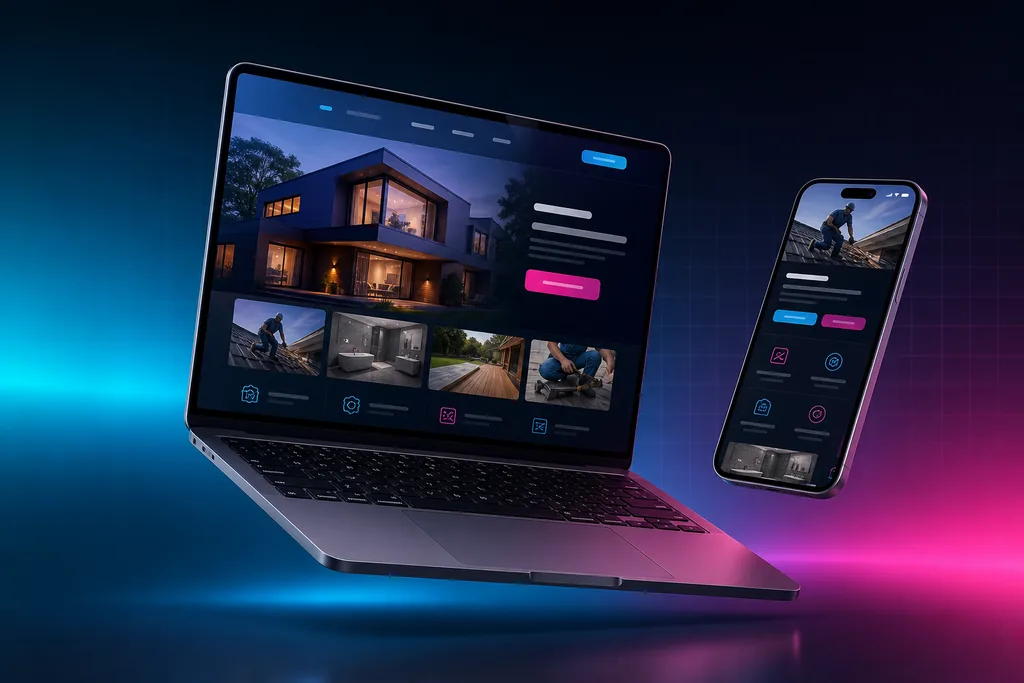

New Business Website
A professional website built for your business — design, hosting, security, and reviews handled for you.
- Custom professional design
- Hosting & security included
- Mobile-first & fast
- Live review widget built in
Website Support
Already have a website? We keep it updated, secure, fast — and make your changes for you.
- Updates, backups & security
- Content edits done for you
- Speed & uptime monitoring
- Works with sites we didn’t build
The Trust Gap Is the Whole Game
Every homeowner who lands on your website arrives carrying a story — the cousin whose remodel went six months over, the neighbor whose roofer vanished with the deposit, the headlines about contractor fraud after every storm season. Fair or not, you start each sale in a trust deficit, and your website either closes that gap in the first sixty seconds or the visitor moves to the next name on their list.
The good news: the gap closes with evidence, and evidence is exactly what a contractor has. Finished projects. A license number. An insurance certificate. Clients willing to say the job came in as promised. Most contractor websites bury all of it under generic slogans about quality and integrity — words every fraudster also uses. The build below leads with proof instead.
And the stakes scale with the job. A faucet repair customer skims; a homeowner planning an addition will read every page, look up your license, and cross-check your reviews twice. The bigger the projects you want, the harder your website has to work.
What Belongs on a General Contractor’s Website
A project gallery organized like buyers think
Homeowners don’t browse “our work” — they hunt for their project. Kitchens with kitchens, bathrooms with bathrooms, additions with additions, decks with decks. Each category gets its own gallery page with real photos of your completed jobs, a sentence or two on the scope, and a path to request a quote for the same kind of work. Before-and-after pairs are the strongest format in the trade: they let a homeowner see their own dated kitchen in your “before” and their dream in your “after.”
License and insurance, displayed like the asset it is — the explainer most contractors never get
Here’s the piece of contractor web design that does double duty as compliance and as marketing, and almost nobody builds it properly. In a number of states, your website legally counts as advertising — and several states require your contractor license number to appear on your advertising, websites included. California is the best-known example, and other states and trades have their own variations. A site with no license number visible isn’t just missing a trust signal; in some states it’s a violation waiting for a complaint.
But treat this as opportunity, not chore. The homeowner comparing three contractors has been told by every consumer-protection article they’ve read: verify the license, confirm the insurance. The contractor who puts the license number in the footer of every page, states liability and workers’ compensation coverage plainly, and even links to the state’s license-lookup tool has just done the homeowner’s homework for them — while the competitors made them dig. That’s a bid-winning move that costs nothing.
We build license and insurance information into contractor sites as a designed, visible element: license number in the footer sitewide, a trust section near quote forms, and space for bond details where your state uses them. Requirements differ by state and trade, so confirm your exact obligations with your licensing board — we’re web designers, not construction attorneys. What we promise is that your site will never be the reason a homeowner couldn’t verify you, or the reason a board complaint had something to point at.
Service pages for every job you want more of
One “Services” page listing fifteen trades ranks for nothing. A real page for each line of work — kitchen remodeling, bathroom remodeling, home additions, garage conversions, whole-home renovation — captures the searches homeowners actually type and shows them similar projects you’ve completed. Write each page for the homeowner, not the trade: what the process looks like, how long jobs typically run, how you handle permits, what happens at the first site visit.
A quote form that qualifies, not just collects
“Name, email, message” invites tire-kickers and gives you nothing to triage with. A better form asks the project type, the property’s town, a rough sense of scope, and the hoped-for timeline. Serious homeowners happily answer; the ones who won’t were never going to sign. Your follow-up gets faster and your close rate climbs, because you’re calling people whose projects you already understand.
The people behind the company
Homeowners are inviting your crew into their home for weeks or months. An about page with the founder’s real face and story, how long you’ve built in the area, and photos of the actual crew converts quietly but constantly. Generic hard-hat stock photos do the opposite — they suggest there’s something you’d rather not show.
Financing and payment expectations, stated up front
Large remodels live or die on financing, and homeowners quietly rule out contractors before ever asking about it. If you offer or partner on financing, a short plain-English page — how it works, who provides it, what the application involves — keeps big-ticket prospects in the funnel instead of postponing the project another year. Even without financing, stating how payment milestones typically work (deposit, draws tied to progress, final payment at walkthrough) does real trust work: the homeowner burned by a deposit-and-disappear story relaxes the moment they see your structure tied to completed stages. It also pre-frames the contract conversation, so your first meeting starts further down the path.
Reviews and references, working sitewide
After the license check, reviews are the homeowner’s next stop. Real client words — especially ones that mention budget honesty, schedule, and how the crew left the site — answer the fears that slogans can’t. The Bird Local review widget on every WebEngine site streams your live Google reviews next to your quote forms, exactly where hesitation happens.
Local SEO for Contractors
Contracting is a service-radius business, and the searches that feed it are local and specific: “general contractor [city],” “kitchen remodel [city],” “home addition contractor near me.” Showing up takes a website and a Google Business Profile working as a pair.
Your Google Business Profile, kept honest
Right category (General Contractor, plus the remodeling categories that apply), accurate service area, real project photos uploaded steadily, and a name, address, and phone that match your website exactly. If you work from home and hide the address, set the profile as a service-area business — consistency still rules.
Service-plus-city pages, built the honest way
If you build across several towns, pages pairing your strongest services with the towns you serve — “kitchen remodeling in [town]” — extend your reach beyond your shop’s zip code. The line between smart and spammy is real content: projects you’ve completed in that town, permit and HOA notes specific to it, directions your estimator actually drives. Lazy duplicates get filtered; genuine local pages compound. Our local SEO guide covers the wider playbook.
Reviews after every job, systematically
The contractors who own the map pack aren’t lucky — they ask. A simple habit of requesting a review at final walkthrough, when the homeowner is standing in their finished space, builds the review velocity the map rewards. The Bird Local widget supports that collection flow and puts the results to work on your site the same day.
Design Psychology: Look Like the Bid You Want to Win
A homeowner can’t inspect your framing from a website, so they judge what they can see: the craftsmanship of the site itself. A dated, broken, or template-obvious website quietly suggests dated, careless work — exactly the inference you can’t afford at bid time.
- Substance over flash. Clean structure, honest photography, fast load. Contractor sites don’t need animation; they need to feel as solid as the work.
- Your projects as the visual language. The hero image should be a job you built, not a stock model in a tool belt. Local homeowners sometimes recognize the houses — that’s free credibility.
- Proof near every decision point. License number, insurance line, and a review beside each quote button, so the trust answer arrives at the moment of doubt.
- Plain-spoken process copy. “Here’s what happens after you request a quote” — site visit, written estimate, contract, schedule — removes the fear of the unknown that stalls big-ticket decisions.
- Mobile-first, jobsite-tested. Homeowners browse from couches, but they also pull your site up in a driveway to show a spouse. It has to work flawlessly on a phone in sunlight.
The Cost Conversation, Had Honestly
You price jobs for a living, so here’s the market priced plainly: freelance designers typically charge a mid four-figure upfront fee for a custom contractor site, with hosting and changes billed separately. Agencies generally quote five figures once galleries, service pages, and lead routing are done properly. Contractor-marketing firms mostly sell websites inside monthly retainers that outrun the site’s value within a couple of years — and some keep the site if you cancel.
The WebEngine model
One flat monthly plan covers the custom build, hosting, security, ongoing maintenance, mobile-first design, local SEO foundations, and the Bird Local review widget. No change-order surprises — we know how you feel about those. The complete inclusion list is on our Web Design page, written the way you’d want a sub’s bid written: everything itemized, nothing vague.
Where Contractor Websites Lose Bids
- No visible license or insurance information — a compliance risk in several states and a trust failure in all of them.
- A photo dump instead of a gallery — unsorted images with no captions tell no story and sell no projects.
- Stock photos posing as your work — homeowners notice, and the deception taints everything else on the page.
- One vague services list where ten real service pages should be — invisible to search, unconvincing to buyers.
- A bare-bones contact form that produces unqualified leads and slow follow-up.
- Slogans doing proof’s job. “Quality craftsmanship and integrity” is what every scammer’s site says too. Evidence wins; adjectives don’t.
- A site that hasn’t changed since you built it — projects from years ago suggest a company that stopped growing.
Contractor Website Design FAQs
How much does a contractor website cost?
Typical market shape: freelance designers usually charge a mid four-figure upfront fee for a custom build, agencies often quote five figures once project galleries and lead forms are properly done, and contractor-marketing companies tend to bundle the site into an ongoing monthly retainer. WebEngine builds contractor websites on one flat monthly plan — design, hosting, maintenance, and a live review widget included — with the full list on our Web Design page.
Does my contractor license number need to be on my website?
In a number of states, yes. Several states treat a website as advertising and require your contractor license number to appear on it — California is a well-known example — and rules vary by state and trade. We build license and insurance information into the site as a visible design element rather than an afterthought, and we recommend confirming your state’s exact requirements with your licensing board.
What should a contractor website include?
A homepage that establishes credibility fast, a project gallery organized by job type, individual service pages for each kind of work you want more of, a visible license-and-insurance section, an about page with the real people behind the company, reviews, a service-area statement, and a quote-request form that gathers enough detail to qualify the lead.
How do I get more qualified leads from my website?
Ask better questions. A form that captures the project type, rough scope, property location, and hoped-for timeline filters out the tire-kickers and lets you respond to serious inquiries first. Pairing each service page with photos of similar completed projects also pre-qualifies visitors — people who contact you after seeing your kitchen remodels already want what you build.
Should my project photos be professional?
They should be real, recent, and well-lit — your own completed jobs, never stock imagery presented as your work. Phone photos taken in good light work fine when shot deliberately: wide angles, finished and cleaned spaces, before-and-after pairs. A gallery of genuine local projects outsells a polished gallery of someone else’s work every time, because savvy homeowners can tell.
How does my website help me show up on Google Maps?
Your Google Business Profile drives the map pack, and your website backs it up: matching business name, address, and phone, the right categories, service pages that prove you do the work people search for, and steady reviews. Every WebEngine site includes the Bird Local review widget, which shows your live Google reviews on the site and supports collecting new ones after each completed job.
How long does a contractor website take to launch?
A few weeks for most builders. We start from a proven contractor site structure, so the schedule mostly depends on gathering your project photos, license and insurance details, service list, and the areas you serve.
Explore More
See the full web design service, browse every industry we serve, or step into a related trade: kitchen and bath remodeler website design, roofing website design, and construction company website design.
Ready to Win the Jobs You Actually Want?
Right now a homeowner in your area is comparing three contractors with their license board’s lookup tool open in the next tab. Be the one whose website already answered everything — license visible, projects proven, process explained. One flat monthly plan, detailed on our Web Design page. Have a site that needs work instead? Start with Website Support.
New Business Website
A professional website built for your business — design, hosting, security, and reviews handled for you.
- Custom professional design
- Hosting & security included
- Mobile-first & fast
- Live review widget built in
Website Support
Already have a website? We keep it updated, secure, fast — and make your changes for you.
- Updates, backups & security
- Content edits done for you
- Speed & uptime monitoring
- Works with sites we didn’t build