
Roofing Website Design That Books Inspections
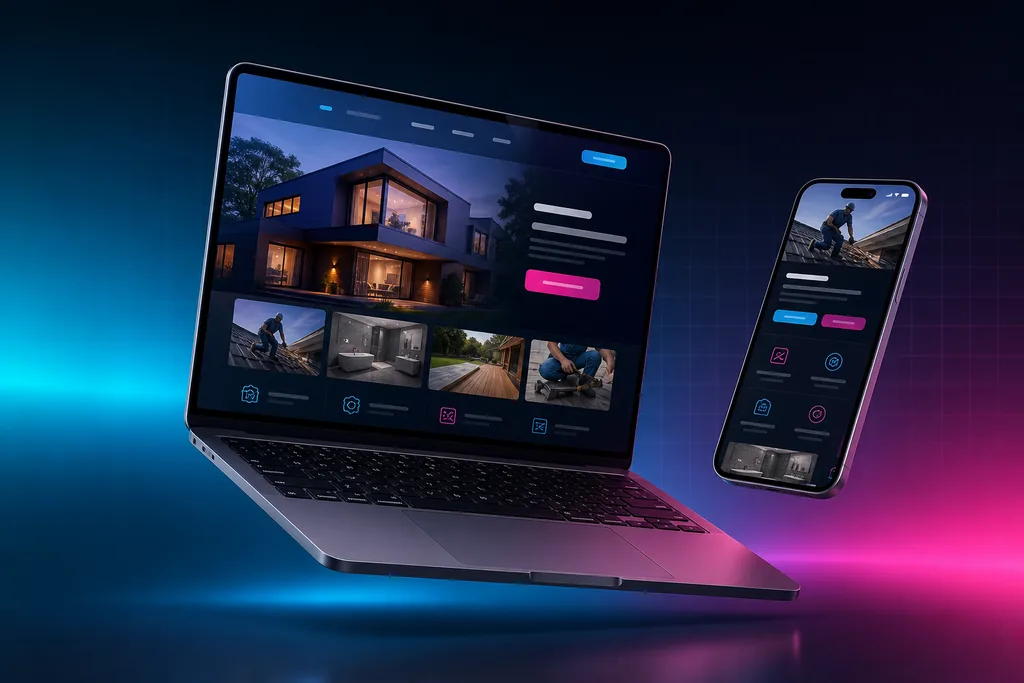
A roofing website has one core conversion: the inspection request. Everything on the site — storm-damage pages, project galleries, license proof, financing info — exists to make a skeptical homeowner comfortable asking you onto their roof. WebEngine builds roofing sites that do exactly that, on one flat monthly plan with hosting, maintenance, and a live review widget included.

New Business Website
A professional website built for your business — design, hosting, security, and reviews handled for you.
- Custom professional design
- Hosting & security included
- Mobile-first & fast
- Live review widget built in
Website Support
Already have a website? We keep it updated, secure, fast — and make your changes for you.
- Updates, backups & security
- Content edits done for you
- Speed & uptime monitoring
- Works with sites we didn’t build
The Trust Deficit Every Roofing Website Inherits
Roofing has a reputation problem it didn’t entirely earn but absolutely has to manage: after every major hail or wind event, out-of-town crews flood the neighborhood, knock doors, collect deposits, and vanish. Homeowners know the stories. So when they search for a roofer, they arrive suspicious — and your website’s first job is to be the opposite of the guy at the door.
That changes what “good design” means in this trade. A roofing website doesn’t win by shouting urgency. It wins by looking established, local, licensed, and patient — while still making the next step effortless for the homeowner standing in the driveway looking at missing shingles.
Make the inspection the obvious next step
Almost nobody buys a roof from a website. They request an inspection. So the inspection form is your real product page: short, mobile-friendly, asking only what scheduling needs — address, contact, what prompted the request (leak, storm, age, sale of home), and preferred times. If the inspection is free, say so plainly. Every page on the site should end within one scroll of that form or a tap-to-call button.
Prove you’ll still exist next year
Longevity signals carry more weight in roofing than in almost any other trade: years in business, a real local address, your license number, proof of insurance, manufacturer certifications, and warranty terms you actually stand behind. A homeowner choosing between two bids often picks the company that simply looks more likely to honor a warranty claim in year eight.
Show finished roofs in their neighborhood
A project gallery organized by town and roof type — asphalt in one suburb, metal on the farmhouse outside it — does double duty: it proves craftsmanship, and it proves you’re genuinely local. Pair each project with a sentence about what was done. Drone shots help, but honest before-and-after photos from your own jobs beat glossy manufacturer renders every time.
Features a Roofing Contractor Website Needs
Storm-damage landing pages, ready before the storm
After a hail event, searches for “hail damage roof repair [town]” spike for a few weeks and then fade. The companies that capture that surge are the ones whose storm pages already existed — explaining how to spot hail and wind damage, what your inspection covers, how the insurance-claim process works, and why homeowners should choose a local contractor over the door-knockers. We build these pages as permanent parts of the site, so when the storm hits, you’re already ranked instead of scrambling to publish.
The insurance-claim section — and the legal line it must not cross
Here is the deep trap in roofing marketing: insurance-restoration language is regulated, and a lot of common sales copy crosses the line. Many states prohibit contractors from paying, waiving, or rebating a homeowner’s insurance deductible — Texas went as far as making it a criminal offense — so phrases like “we’ll cover your deductible” or “free roof with an approved claim” can expose your company to real penalties. Separately, negotiating a claim on the homeowner’s behalf is generally reserved for licensed public adjusters; a roofer’s website that promises to “handle your claim” or “get your claim approved” is describing public adjusting without a license in many states.
The compliant version is still persuasive: explain the claim process step by step, offer to document the damage thoroughly, meet the adjuster on site, and provide a detailed scope and estimate the homeowner can use. That’s genuinely helpful, fully legal, and — bonus — it reads as more trustworthy than the too-good-to-be-true version. We write roofing insurance pages to this standard by default. We’re web designers, not lawyers, so confirm your state’s rules with your association or counsel — but we will never ship you a page that promises to eat a deductible.
Financing information that opens doors
A full replacement is a major unplanned expense, and many homeowners assume they can’t afford it until the website tells them otherwise. A financing page — kept general, using your lending partner’s approved disclosure language rather than invented payment figures — turns “we can’t right now” into an inspection request. The same Truth in Lending advertising rules that govern other trades apply here: advertise specific payment terms and you owe the full disclosures, so keep site copy qualitative.
Material and service pages that catch real searches
Homeowners search the specifics: “metal roof vs shingles,” “roof leak repair,” “flat roof contractor,” “gutter replacement.” Give each service and major material its own page — repair, full replacement, asphalt shingles, metal, flat/commercial if you do it, gutters, siding if you offer them. Each page should answer what it costs in qualitative terms, how long it takes, what the warranty covers, and end at the inspection form.
The basics, done properly
- License number, insurance, and certifications in the footer — sitewide, not hidden on an about page.
- Tap-to-call plus the inspection form reachable from every page on mobile.
- Warranty page separating manufacturer material warranties from your workmanship warranty in plain English.
- Service-area list that matches where you actually send crews.
- Fast mobile load — storm traffic is phone traffic, often on a strained network after the weather event.
Local SEO for Roofers: Winning the Search Before the Storm
Roofing search demand swings with the weather, but rankings are built in the quiet months. The contractor who invests in local SEO year-round owns the surge when it comes; the one who starts after the hail is weeks behind a market that lasts weeks.
Google Business Profile and the map pack
The map pack decides a huge share of “roofer near me” calls. Your profile needs the roofing-contractor category, real project photos added regularly, accurate service areas, and exact name/address/phone agreement with your website. Reviews are the tiebreaker — and after every completed job is the natural moment to ask. The Bird Local review widget included with every WebEngine site shows your live Google reviews on the site and supports that collection rhythm.
Town-by-town service pages
Roofing crews travel. A page for each significant town in your territory — with projects you’ve completed there, the roof types common in that housing stock, and local permit notes where relevant — is how you appear in searches across the whole service area instead of just your home base. The test for each page: would a homeowner in that town recognize their neighborhood in it? If yes, it earns rank; if it’s find-and-replace filler, it won’t.
Content that answers homeowner questions
“How long does a roof last,” “signs of hail damage,” “does insurance cover a twenty-year-old roof” — these searches happen all year, and honest answers earn trust and rankings before the homeowner ever needs you. This is also exactly the material AI assistants quote when someone asks them roofing questions, which is where a growing slice of search is heading. No ranking guarantees from us or anyone honest: local SEO compounds over months.
Design Psychology: Looking Like the Company That Stays
Most home-services advice tells you to crank up the urgency — countdown banners, blinking phone numbers, “limited slots.” In roofing, that advice backfires. The homeowner has been conditioned by the door-knockers to associate pressure with fraud, so the visual language that converts in this trade is the opposite of a funnel page. The design cues that matter:
- Established over flashy. Solid navigation, real photography, consistent branding. A roofing site that looks like a landing-page funnel reads as a storm chaser.
- Faces and trucks. The owner’s photo and name on the site signals accountability — the precise thing homeowners fear is missing.
- Local proof everywhere. Projects by neighborhood, town names in copy that could only be written by someone who works there.
- Calm claims. “Thorough inspection, detailed estimate, no pressure” outperforms “ACT NOW” with this audience, every time.
- Reviews at the decision point. Real homeowner words beside the inspection form answer the suspicion the visitor walked in with.
Between the bid and the signature
Here’s a moment most roofing websites never plan for: the homeowner has three estimates on the kitchen table and is re-Googling all three companies before choosing. Your site gets a second visit with a completely different question — not “can someone come look at my roof” but “which of these companies will still answer the phone when a shingle lifts in year six.” That second visit is won by the unglamorous pages: the plain-English warranty page, the project gallery with addresses-worth-of-local detail, the owner’s name and license number, and a steady wall of recent reviews. The same pages also rescue you from the door-knock scenario — when a canvasser hits the neighborhood after a storm, the cautious homeowner’s first move is to Google a local roofer from the driveway. If your site reads as established and patient while the canvasser pushes for a same-day signature, the contrast does your selling for you. We design roofing sites with that comparison visit in mind, because in this trade the website’s job isn’t finished when the form is submitted.
What Does a Roofing Website Cost?
Qualitative market ranges, because hiding them helps nobody: DIY builders run a low monthly subscription with all the work left on your plate; freelancers typically quote a mid four-figure upfront project with maintenance extra; agencies commonly land in five figures plus retainers; and roofing-marketing specialists often fold the website into substantial monthly packages where you may not own the site if you leave. WebEngine’s model is one flat monthly plan — custom design, hosting, security, maintenance, local SEO foundations, and the review widget included, with full details on our web design page.
Mistakes Roofing Websites Keep Making
- Deductible-waiver language — illegal in many states and a trust-killer with savvy homeowners.
- No storm pages until the storm — by the time they’re indexed, the surge is over.
- A gallery of manufacturer stock images instead of your own completed roofs.
- Hidden licensing — the single cheapest trust signal in the trade, left off the site.
- A long inspection form asking for roof age, square footage, and shingle brand. Ask less; book more.
- Vague warranty talk. “Fully warrantied” means nothing; a plain-English warranty page closes bids.
- Ignoring the off-season. The quiet months are when next storm season’s rankings are built.
Roofing Website Design FAQs
How much does a roofing website cost?
Market ranges vary widely: DIY builders charge a low monthly subscription (your evenings not included), freelancers typically charge a mid four-figure upfront fee, and agencies or roofing-marketing firms commonly charge five figures or substantial monthly retainers. WebEngine builds roofing websites on one flat monthly plan with hosting, maintenance, and a live review widget included — details on the web design page.
Can my roofing website say we’ll cover the insurance deductible?
No — many states prohibit contractors from paying, waiving, or rebating insurance deductibles, and Texas has made it a criminal offense. Phrases like “free roof with an approved claim” are exactly the language regulators target. The compliant approach: explain the claim process, document damage thoroughly, meet the adjuster, and provide a detailed estimate. Confirm your state’s rules with counsel or your contractors’ association.
What should a storm-damage landing page include?
How to recognize hail and wind damage, what your inspection covers, a step-by-step explanation of the insurance-claim process (without promising to negotiate the claim), why homeowners should verify licensing and local presence before signing with door-knockers, and a short inspection-request form. Build it before storm season so it’s already ranking when demand spikes.
What pages should a roofing contractor website have?
A homepage focused on the inspection request, pages for each service and material (repair, replacement, asphalt, metal, flat/commercial, gutters), a storm-damage page, an insurance-claim guide, a financing page using your lender’s approved language, a project gallery organized by town, a warranty page, an about page with the owner’s name and license details, and town-level service-area pages.
How do roofers show up on Google after a storm?
By being ranked before it. The map pack favors profiles with consistent information, steady reviews, and websites with established storm and service-area pages. Start months ahead: local SEO compounds slowly, and nobody can honestly guarantee rankings on a deadline. Every WebEngine site ships with local SEO foundations and the Bird Local review widget to support the review flow that drives map visibility.
Should I put financing on my roofing website?
Yes — many replacement decisions hinge on it. Keep the copy general (“financing available, subject to credit approval”) and use the disclosure language your financing partner provides, because advertising specific payment amounts or terms triggers federal Truth in Lending disclosure requirements. A compliant financing page turns “we can’t afford it” visitors into inspection requests.
How long does it take to launch a roofing website?
Most WebEngine roofing sites launch in a few weeks, since we build from a proven contractor structure rather than a blank canvas. The main variables are how quickly we receive your project photos, license and insurance details, and warranty terms.
Explore More
Roofing is one of 75+ industries we build for. See the full web design service, browse all industries we serve, or visit a neighboring trade: HVAC website design, general contractor website design, and solar company website design.
Ready to Look Like the Roofer Who Stays?
The next storm will send your whole town to Google at once. Get the website that’s already there — licensed, local, reviewed, and one tap from an inspection request. One flat monthly plan, everything included.
New Business Website
A professional website built for your business — design, hosting, security, and reviews handled for you.
- Custom professional design
- Hosting & security included
- Mobile-first & fast
- Live review widget built in
Website Support
Already have a website? We keep it updated, secure, fast — and make your changes for you.
- Updates, backups & security
- Content edits done for you
- Speed & uptime monitoring
- Works with sites we didn’t build