
How Much Does a Restaurant Website Cost?
A restaurant website costs anywhere from a small monthly DIY subscription to five figures for an agency build — and the number depends almost entirely on how much of the dining-specific work is done for you. The real drivers are a menu you can update in seconds, online ordering or a reservation link, food photography that makes people hungry, and pages that load fast on a phone. WebEngine builds all of that on one flat monthly plan with hosting, maintenance, and ongoing updates included.

New Business Website
A professional website built for your business — design, hosting, security, and reviews handled for you.
- Custom professional design
- Hosting & security included
- Mobile-first & fast
- Live review widget built in
Website Support
Already have a website? We keep it updated, secure, fast — and make your changes for you.
- Updates, backups & security
- Content edits done for you
- Speed & uptime monitoring
- Works with sites we didn’t build
Why “How Much Does a Restaurant Website Cost” Has No Single Answer
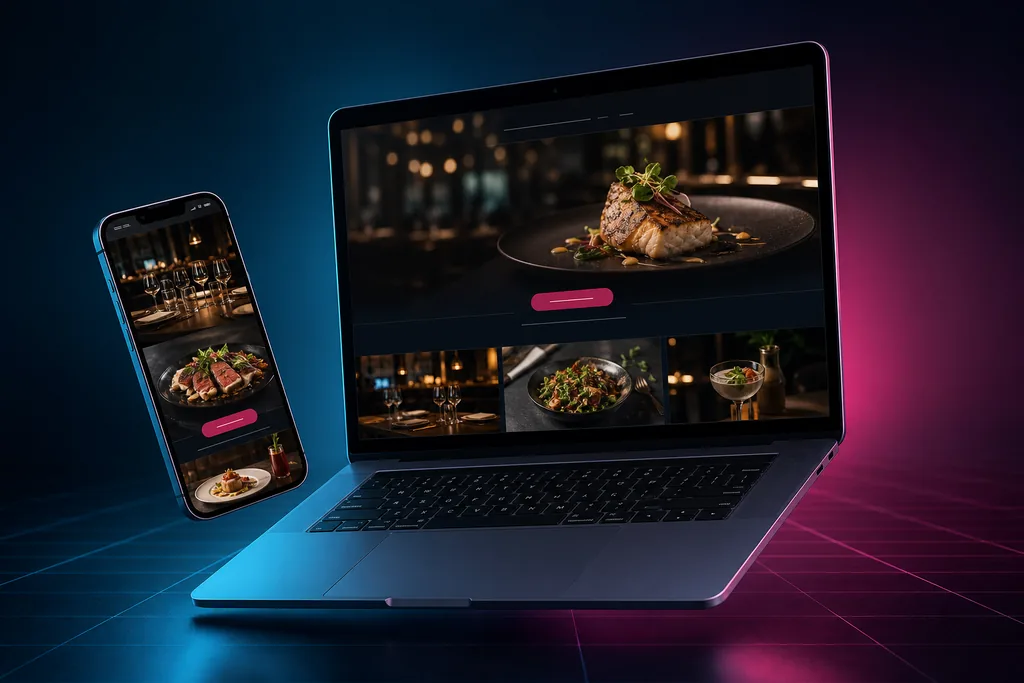
The phrase “restaurant website” covers wildly different things. To one owner it means a single page with an address, a phone number, and a photo of the dining room. To another it means a working platform: a live menu that changes with the season, online ordering or a reservation integration, food photography that sells the dishes, pages for catering and private events, and structured data that pushes the menu and hours straight into Google and Maps. Those two projects share a name and almost nothing else — which is exactly why quotes for restaurant websites range from a few dollars a month to well into five figures. Before you can judge a price, you have to know which of those you are actually buying.
The useful way to think about cost isn’t “cheap versus expensive.” It’s how much of the restaurant-specific work is included — because in hospitality, that work is where a site either fills tables and tickets or just sits there looking nice. A template can give you a handsome homepage in an afternoon. It cannot, on its own, keep a menu current on a busy Friday, make online ordering feel effortless on a phone, or make your food look worth leaving the house for. That gap is the whole story of restaurant website pricing.
What Actually Drives a Restaurant Website’s Price
A law firm’s site is priced by practice areas and locations; a dentist’s by services and providers. A restaurant site is priced by a specific set of moving parts that dining businesses need in some combination. These are the cost drivers unique to this niche:
- A live, editable menu. This is the single most-visited page on any restaurant site, and it changes constantly — seasonal dishes, sold-out items, new prices, a rotating specials board. A menu you can edit yourself in seconds is worth far more than a pretty PDF that requires a designer and a wait every time the kitchen changes a dish. How the menu is built and how easily it updates is one of the biggest levers on both price and ongoing cost.
- Online ordering or reservations. Depending on your model, this is takeout and delivery ordering, table reservations through a provider like OpenTable or Resy, waitlist links, or a direct order flow that keeps the ticket instead of handing a third-party app a cut of every order. Wiring this in cleanly — so it works on a phone, mid-rush — is real build work and a genuine cost driver.
- Food photography that sells. People eat with their eyes, and nothing converts a hungry browser like great photos of the actual food. A site built to showcase high-quality imagery, fast, is doing sales work a text menu never will. Whether photography is included or left to you changes both the price and the result.
- Catering, private events, and group dining. Many restaurants earn a serious share of revenue off the à la carte menu — catering orders, buyouts, private rooms, holiday parties. Each of those wants its own page with the right inquiry form, and each adds to page count, which moves the price.
- Local search and structured data. A guest deciding where to eat right now is often searching on a phone, and Google pulls hours, menu, and location into the result. A site with the right structured data and a clean Google Business Profile connection shows up correctly — open now, menu attached — instead of losing the walk-in to a competitor down the block. That setup is real work and part of what a fair price reflects.
Strip those away and you have a business-card website that any builder can produce for almost nothing. Include them properly and you have the thing that actually fills tables and tickets — which is the version worth paying for, and the version this restaurant website design page describes in full.
The Real Market: DIY, Freelancer, Agency, or Specialist
Here’s the honest landscape for a restaurant website, described the way the market actually works rather than with invented figures. Each route buys a different mix of price, control, and how much of the dining-specific work lands back on your team during service.
DIY website builders
A small monthly subscription, and you do the building. Fine as a placeholder while a new spot opens its doors. But the live menu, the ordering flow, the event pages, and the food photography remain a second job for you or a manager — usually done late, after close, when you should be resting. Templates make the menu tedious to keep current and rarely nail mobile speed, which matters most in a business where a guest is deciding on a phone whether to walk in now. The sticker price is the lowest; the nightly time cost is the highest.
Freelance designers
Commonly a one-time mid four-figure project fee. You get a custom site and a human who understands design. The catches are structural: hosting is usually separate, and every post-launch change — a seasonal menu swap, a price update, new holiday hours, a fresh specials page — is billed as it comes. Restaurants change their sites more than almost any other local business, so those small edits add up quietly, and a slow turnaround means guests see a menu the kitchen retired weeks ago.
Agencies and hospitality firms
Frequently five figures, priced for established restaurants or growing groups with a marketing budget behind them. You get a team, a process, and specialist knowledge of hospitality — and a price and pace that assume a business already doing steady covers. For a newer owner or a single independent spot funding its own growth, an agency build is often more site than the moment calls for, usually with a substantial monthly retainer on top of the build.
A specialist on a flat monthly plan
The model built for how restaurants actually operate. Instead of a large upfront project fee plus surprise invoices at every menu change, the whole site — custom design, a live editable menu, online ordering or reservations, food photography, event and catering pages, local-search setup, hosting, security, maintenance, and ongoing updates — is one predictable monthly plan. It trades the big one-time number for a small recurring one that already includes the parts freelancers and agencies bill separately. This is the WebEngine model, and it’s why a new seasonal menu or a price change is an update instead of an invoice.
What’s Usually Included — and What Quietly Isn’t
The cheapest quote and the fairest quote can look identical until you read what’s inside. When you compare restaurant website prices, check each one against this list — the gaps are where a low number hides future cost:
- A custom design that matches the atmosphere of the room and makes the food the hero.
- A live, editable menu you can update yourself in seconds — not a PDF that needs a designer and a wait.
- Online ordering or reservations, wired to your provider and working smoothly on a phone during a rush.
- Food photography presented fast and large, because the pictures do the selling.
- Catering and events pages with the right inquiry forms for higher-value bookings.
- Local search and structured data, so your hours, menu, and location show correctly in Google and Maps.
- Mobile speed and accessibility, since most guests check your site on a phone while deciding where to eat.
A quote that includes only the first line and calls itself a “restaurant website” isn’t wrong — it’s just a different, smaller product. Knowing the full list lets you compare like with like, and it’s the same standard every build on our web design service is held to.
The Ongoing Costs Nobody Quotes You Upfront
The build price is only half the picture. Every restaurant website carries recurring costs whether or not they appear on the first invoice — and for restaurants specifically, the ongoing side runs higher than for most small businesses because the site changes with the kitchen:
- Hosting, domain, and SSL — the standing rent of being online, and non-negotiable for a site taking orders and reservations.
- Software, security updates, and backups — a neglected site that takes payments or bookings is a liability, and your restaurant’s name is the last thing you want serving errors at the dinner rush.
- Menu and price updates — new dishes, sold-out items, seasonal changes, and price adjustments. This is the change restaurants make most, and with freelancers and agencies it is billed by the hour.
- Hours, specials, and events — holiday hours, weekend specials, and event nights that need to go live quickly to matter, before the night they’re for.
This is the hidden math that makes a cheap upfront build expensive over time, and an all-inclusive monthly plan the more honest deal for a working restaurant. WebEngine folds hosting, security, maintenance, and those routine updates into the plan, and handles new menus, prices, and specials through website support — so the number you agree to is the number you pay.
Restaurant Website Cost FAQs
How much does a restaurant website cost?
It depends almost entirely on who builds it and how much of the restaurant-specific work — a menu that stays current, online ordering or a reservation link, mouth-watering food photography, and hours that show correctly on a phone — is genuinely included. DIY builders cost a small monthly subscription but leave all of that to you. Freelancers usually quote a mid four-figure project fee. Agencies often reach five figures, with hosting and every future menu edit billed on top. WebEngine builds restaurant sites on one flat monthly plan with hosting and maintenance included — full details on our Web Design page.
Why do restaurant website quotes vary so much?
Because “restaurant website” can mean a one-page menu-and-map or a full ordering platform. A single page with hours and a PDF menu is cheap. A site with a live, editable menu, online ordering or a reservation integration, professional food photography, event and catering pages, and structured data that puts your hours and menu straight into Google is a different project with a different price. Most of the spread comes from how much of that dining-specific machinery is actually included versus quietly left out.
Is a cheap DIY restaurant website worth it?
As a placeholder while you open, a DIY builder is fine. The problem is that the parts that make a restaurant site actually drive covers — a menu you can update in seconds, fast mobile pages, working online ordering, and photos that make people hungry — are exactly the parts a template makes tedious or leaves half-built. You end up editing a PDF menu at midnight and fielding calls asking whether you’re open. In a business where a guest checks your site on a phone while deciding where to eat right now, a slow or stale page quietly sends them to the restaurant next door.
What ongoing costs come with a restaurant website?
Every restaurant site has recurring costs whether they are bundled or not: hosting, a domain, SSL, software and security updates, and backups. On top of that, restaurants change their sites constantly — seasonal menus, new prices, holiday hours, specials, and events. With freelancers and agencies those edits are billed hourly, and a delayed menu update means guests order dishes you no longer serve. WebEngine folds hosting, maintenance, and updates into one flat monthly plan, so a price change or a new seasonal menu is an update, not an invoice.
Does online ordering make a restaurant website cost more?
It can, because there is more to build and connect: an ordering flow or a clean integration with a provider, a reservation link, and a checkout that works smoothly on a phone. But it is also where a restaurant site earns back its cost, by turning a browsing guest into a placed order without a third-party app skimming every ticket. A flat monthly plan that already includes the menu, ordering or reservation link, and mobile checkout tends to be cleaner than an agency quote that grows every time you add a feature.
The Simplest Answer to “What Will It Cost Me?”
One flat monthly plan that includes the whole restaurant platform — a live editable menu, online ordering or reservations, food photography, event and catering pages, local-search setup, hosting, and every routine update — with no five-figure quote and no surprise invoices when you change a menu or add a special. See exactly what’s included on the Web Design page, or explore the full restaurant website design service to see how the pieces fit together.
New Business Website
A professional website built for your business — design, hosting, security, and reviews handled for you.
- Custom professional design
- Hosting & security included
- Mobile-first & fast
- Live review widget built in
Website Support
Already have a website? We keep it updated, secure, fast — and make your changes for you.
- Updates, backups & security
- Content edits done for you
- Speed & uptime monitoring
- Works with sites we didn’t build